There is something undeniably majestic about a giant dog. Whether it is the way they command a room or their reputation as "gentle giants" who think they are lap dogs, these breeds offer companionship on a massive scale. However, bringing one of the most popular big dog breeds into your home is not a decision to be made lightly.
Owning a giant breed requires more than just extra space on the sofa; it demands a significant lifestyle shift. From navigating specific health issues like bloat to managing a monthly food budget that rivals a car payment, you need to be prepared. This guide breaks down the true cost and care requirements of the top 7 giant breeds to help you decide if you are ready for life with a big dog.
The Realities of Giant Dog Ownership (Budget, Health Risks, & Training)
Before falling in love with a puppy that fits in your hand, you must understand what that puppy will become. Giant breeds grow rapidly, and their needs scale up just as fast.
The Financial Commitment
Everything costs more with a giant dog. Food bills are the most obvious expense, with many giants consuming 40 to 60 pounds of high-quality kibble a month. Veterinary costs often come as a shock too. Preventatives for fleas, ticks, and heartworm are dosed by weight, meaning you will pay significantly more than the average dog owner.
Health Vulnerabilities
Giant dogs have shorter life expectancies than their smaller counterparts, often averaging 8 to 10 years. You can use a dog years calculator to better understand their aging process. They are prone to orthopedic issues like Hip Dysplasia and arthritis due to the massive weight their joints support, so starting them on hip and joint supplements early is often recommended.
Heavy dogs are also at high risk for "deep-chested" issues like Gastric Dilatation-Volvulus (Bloat), a life-threatening emergency where the stomach twists. Knowing the signs and considering preventative surgery (gastropexy) is standard care for these breeds. They also often develop rough elbow calluses from lying on hard surfaces.
Training and Socialization
An unruly Chihuahua is annoying; an unruly 150-pound Mastiff is a liability. Early socialization is non-negotiable. You must train your dog to walk loosely on a leash and greet guests calmly before they reach their full size.
Great Dane: The Apollo of Dogs
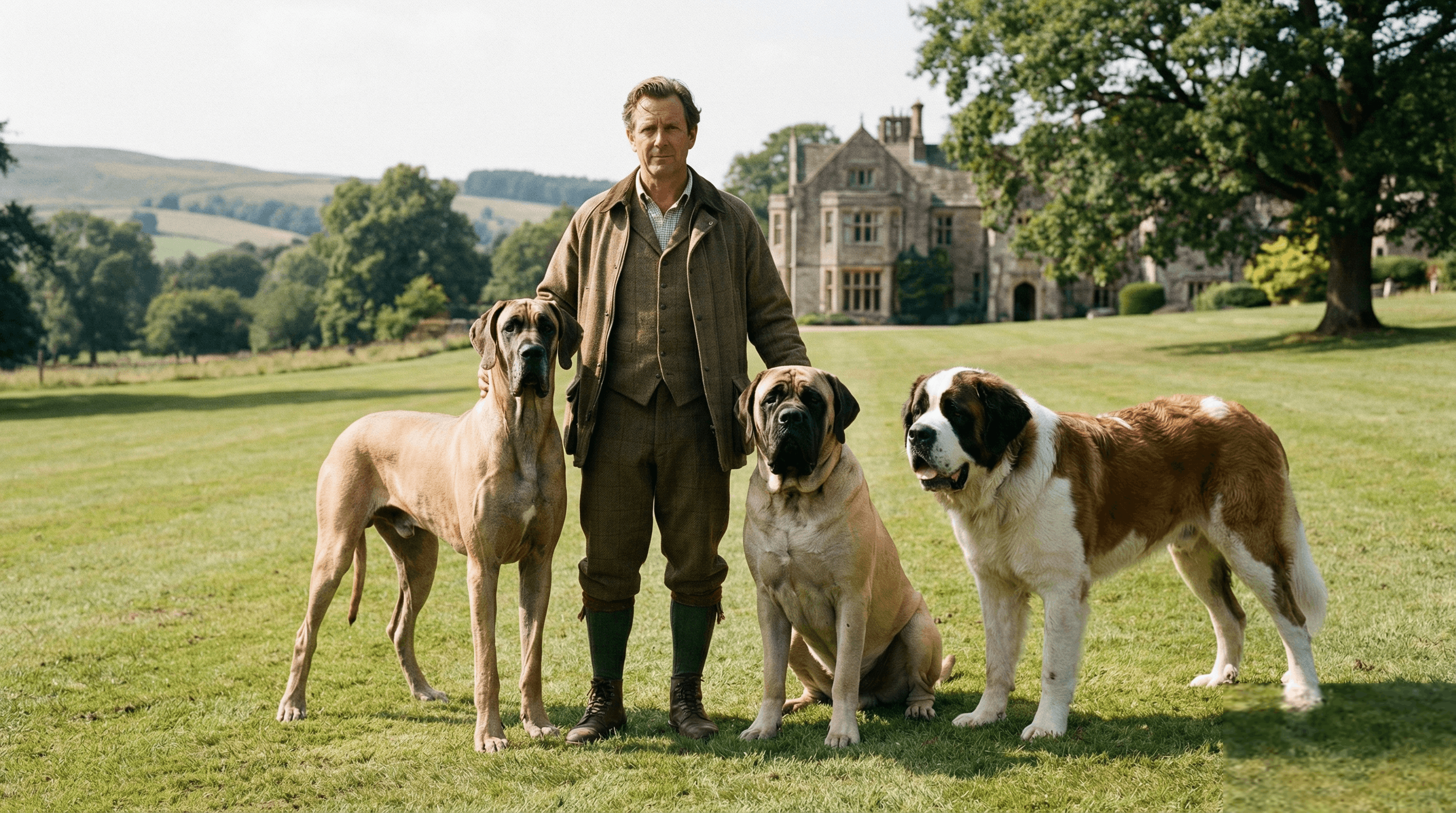
Great Danes are the poster children for giant breeds, widely recognized for their immense height and elegant stature. Despite their imposing size, they are one of the friendliest breeds you will encounter, often oblivious to their own bulk.
- Height: 28–32 inches (71–81 cm)
- Weight: 110–175 lbs (50–79 kg)
- Lifespan: 7–10 years
- Temperament: Friendly, Patient, Dependable
- Activity Level: Medium (Needs daily walks, but loves the couch)
- Est. Monthly Cost: $150–$200
While they hold the record for the tallest dog breed, Great Danes are surprisingly suited for indoor living, provided you have big furniture. They are relatively low energy indoors but require consistent daily walks to maintain muscle tone. Owners must be vigilant about "bloat," as Danes are the number one breed at risk.
English Mastiff: The Heaviest Hitter
If you are looking for mass rather than height, the English Mastiff is the undisputed champion. These dogs are incredibly dense and heavy, with some males tipping the scales at over 230 pounds.
- Height: 27–30 inches (70–76 cm)
- Weight: 160–230+ lbs (73–104+ kg)
- Lifespan: 6–10 years
- Temperament: Courageous, Dignified, Good-natured
- Activity Level: Low
- Est. Monthly Cost: $180–$250
Don't let their size intimidate you; a well-bred Mastiff is a calm and quiet family member. They are natural guardians who tend to watch rather than react aggressively, but their sheer size is a deterrent enough. Be prepared for drool (lots of it) and snoring that can shake the walls.
Cane Corso: The Loyal Protector
The Cane Corso is not just a big dog; it is a working athlete. Descended from Roman war dogs, this breed combines power with intelligence and a strong protective instinct.
- Height: 23–27 inches (58–70 cm)
- Weight: 90–120 lbs (40–54 kg)
- Lifespan: 9–12 years
- Temperament: Affectionate, Intelligent, Assertive
- Activity Level: High
- Est. Monthly Cost: $140–$190
Unlike the laid-back Mastiff, the Cane Corso needs a job to do. They require an experienced handler who can provide rigorous training and socialization. Using the best dog training equipment is essential for handling their power. Without firm leadership and mental stimulation, they can become bossy or destructive.
Saint Bernard: The Famous Gentle Giant
Famous for their role as alpine rescuers, Saint Bernards are the definition of a family dog. They are incredibly patient with children and generally welcoming to strangers, making them poor guard dogs but excellent companions.
- Height: 26–30 inches (66–76 cm)
- Weight: 120–180 lbs (54–82 kg)
- Lifespan: 8–10 years
- Temperament: Playful, Charming, Inquisitive
- Activity Level: Medium-Low
- Est. Monthly Cost: $160–$220
These dogs thrive in cooler climates and can struggle in the heat. Their thick, double coats require regular grooming, and using a quality undercoat rake is necessary to manage the heavy shedding. Like the Mastiff, they are heavy droolers, but if you don't mind a little slobber and hair, their affectionate nature is unmatched.
Great Pyrenees: The Majestic Guardian
Bred to guard livestock from wolves on snowy mountains, the Great Pyrenees is an independent thinker. They are often calm and Zen-like indoors but spring into action if they perceive a threat to their "flock" (which includes your family).
- Height: 25–32 inches (63–81 cm)
- Weight: 85–115+ lbs (39–52+ kg)
- Lifespan: 10–12 years
- Temperament: Smart, Patient, Independent
- Activity Level: Medium
- Est. Monthly Cost: $130–$180
Owners must understand that this breed barks frequently. It is their primary way of warding off predators, and they are nocturnal by nature. They are not dogs that will blindly obey commands; they obey when it makes sense to them. Patience and positive reinforcement using a training clicker can help communicate effectively with this intelligent breed.
Newfoundland: The Family Swimmer
Newfoundlands are strong enough to save a drowning man but gentle enough to be trusted around toddlers. Known as the "nanny dog," their sweetness is their defining characteristic.
- Height: 26–28 inches (66–71 cm)
- Weight: 100–150 lbs (45–68 kg)
- Lifespan: 9–10 years
- Temperament: Sweet, Devoted, Patient
- Activity Level: Medium (Loves swimming)
- Est. Monthly Cost: $150–$210
They require a fair amount of grooming due to their water-resistant double coat. While they are generally healthy, they can be prone to hip dysplasia and heart issues. If you have access to water, you will have a very happy Newfie, as they are born swimmers with webbed feet.
Tibetan Mastiff: The Ultimate Status Symbol
The Tibetan Mastiff is a primitive breed that is more of a guardian than a pet. They are famously expensive and notoriously difficult to train because they were bred to make decisions independently while guarding monasteries in the Himalayas.
- Height: 24–26+ inches (61–66+ cm)
- Weight: 70–150 lbs (32–68 kg)
- Lifespan: 10–12 years
- Temperament: Tenacious, Aloof, Protective
- Activity Level: Medium
- Est. Monthly Cost: $160–$230
This is not a dog for first-time owners or those who want an obedience champion. They are territorial and notoriously wary of strangers. However, for the right owner who understands canine psychology and respects the breed's heritage, they are loyal and fiercely protective companions.
Choosing one of the biggest dog breeds in the world is a commitment that spans roughly a decade. It involves managing a tight budget, navigating specific health challenges, and dedicating time to serious training. But for those who are ready, the reward is a bond that is as massive as the dog itself. Whether you choose the goofy Great Dane or the stoic Great Pyrenees, you are in for a life full of big hugs and even bigger adventures.