
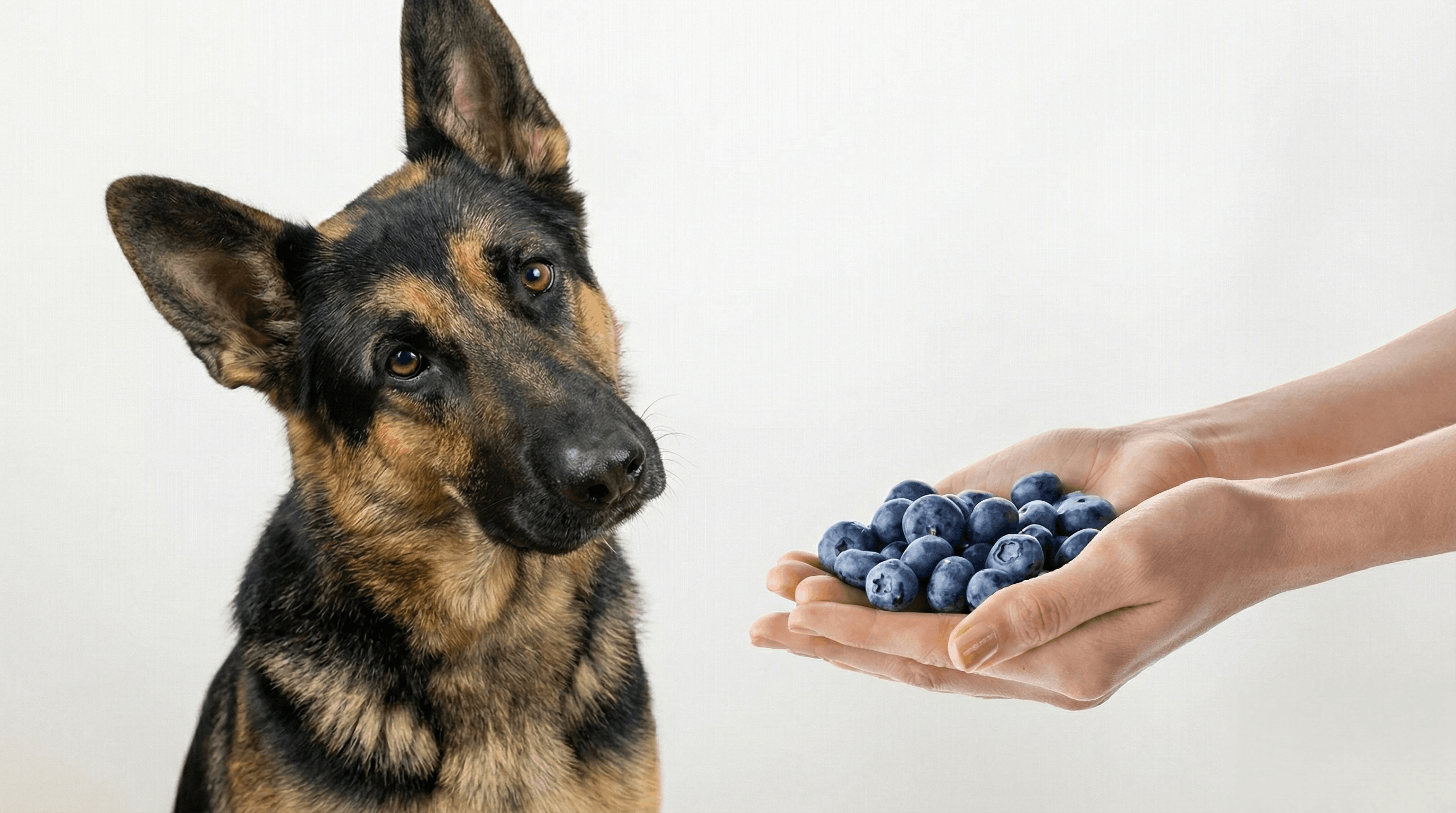
Yes, the short answer is absolutely. Can dogs eat blueberries? They most certainly can, and these little superfoods are one of the best treats you can offer your German Shepherd. Packed with antioxidants, fiber, and vitamins, they are a fantastic, low-calorie snack that supports everything from brain function to joint health.
However, as with any treat, moderation is key. Feeding too many can cause stomach upset, and certain processed blueberry products (like muffins) are strictly off-limits. Let's dive into why these berries are great for your dog and how to serve them safely.
Key Takeaway: Blueberries are a safe, nutrient-dense superfood for dogs. They are excellent for training rewards and stuffing Kongs, especially for active breeds like German Shepherds.
Are Blueberries Good for Dogs?
Blueberries are often called a "superfood" for humans, and that title holds up for our canine companions too. They are low in sugar compared to other fruits and high in beneficial nutrients.
| Nutrient | Benefit for German Shepherds |
|---|---|
| Antioxidants | Fights free radicals, reduces inflammation, and supports brain health. |
| Vitamin C | Boosts the immune system and aids in collagen production. |
| Fiber | Supports healthy digestion and gut regularlity. |
| Phytochemicals | Compounds that may help fight cancer and reduce aging effects. |
Unlike high-calorie commercial treats, fresh blueberries provide a burst of flavor without packing on the pounds. This makes them ideal for GSDs who need to potentialy watch their weight to reduce stress on their hips and joints.
The Brain and Joint Connection
For German Shepherd owners, the two biggest health concerns are usually joint health (Hip Dysplasia) and cognitive function (keeping that working brain sharp).
Blueberries are rich in anthocyanins, the pigment that gives them their deep blue color. Studies have shown that these antioxidants can help reduce oxidative stress and inflammation in the body. For a breed prone to joint issues, any natural anti-inflammatory is a welcome addition to the diet. You might even consider pairing them with a high-quality hip and joint supplement for maximum protection.
Additionally, antioxidants support brain aging. A handful of blueberries can be great "brain food" for your aging Shepherd, helping them stay sharp and alert well into their senior years.
Can Puppies Eat Blueberries?
Yes, puppies can eat blueberries. In fact, they make excellent training treats for young pups because they are small, soft, and tasty.
When introducing them to a German Shepherd puppy, start with just one or two to ensure they don't have any adverse digestive reactions. Their stomachs are sensitive, and too much fiber too quickly can lead to loose stools.
Pro Tip: Freeze blueberries and give them to your teething puppy. The cold texture soothes their sore gums and keeps them occupied!
The Danger Zone: Muffins and Pancakes
While raw or frozen blueberries are safe, processed blueberry foods are not.
You should never feed your dog blueberry muffins, pancakes, pies, or flavored yogurts. These human foods often contain:
- High Sugar Content: Can lead to obesity and dental issues.
- Wheat/Gluten: Unnecessary fillers that can cause allergies.
- Xylitol (Birch Sugar): A common artificial sweetener that is extremely toxic and fatal to dogs.
Always stick to the whole fruit. If you want to mix it up, you can add fresh berries to plain yogurt safely, but check the label to ensure no xylitol is present.
How to Feed Blueberries to Your German Shepherd
Because GSDs are often highly food-motivated, you can use blueberries in various creative ways:
- Fresh: Toss them in the air for your dog to catch. It's a fun game that builds coordination.
- Frozen: Great for hot summer days or as a crunchy treat.
- Meal Topper: Mash a few berries over their kibble to entice picky eaters.
- Kong Stuffing: Mix blueberries with peanut butter or soak them in water and freeze them inside a Kong toy for a long-lasting mental challenge.
How Many Blueberries is Too Many?
Even though they are healthy, they still contain natural sugar and fiber.
- Small Dogs: 2-3 berries.
- Medium Dogs: 5-8 berries.
- Large Dogs (GSDs): 10-12 berries.
Feeding too many can result in diarrhea or an upset stomach. Always follow the 10% rule: treats should not make up more than 10% of their daily caloric intake.
For more ideas on safe fruits, check out our guide on what fruits dogs can eat.
Blueberries are a fantastic addition to your dog's diet when fed correctly. They offer a nutritional boost that supports the active lifestyle of a German Shepherd, protecting their joints and fueling their intelligent minds. So next time you're having a snack, feel free to share a berry or two with your loyal companion.