When my GSD Rex turned 6, I noticed him taking a little extra time to stand up after naps. Nothing dramatic. Just a slight hesitation. A tiny stiffness in his back legs that disappeared after a few steps. Most people would not have noticed. But I had seen this before in older GSDs, and I knew what it could become.
That is when I started researching joint supplements. And what I found was a confusing mess of marketing claims, buzzwords, and products that ranged from genuinely helpful to completely useless.
Why German Shepherds Need Joint Support
German Shepherds have one of the highest rates of hip and elbow dysplasia among all dog breeds. The Orthopedic Foundation for Animals reports that roughly 20% of evaluated German Shepherds show signs of hip dysplasia. Factor in the breed's size, weight, and activity level, and you have a recipe for joint problems.
The truth is simple: most German Shepherds will develop some degree of joint issues as they age. The question is not if, but when and how severe.
Joint supplements will not cure hip dysplasia. Nothing will reverse structural joint damage. But quality supplements can:
- Slow down cartilage degradation
- Reduce inflammation in the joint capsule
- Improve synovial fluid (the lubricant inside joints)
- Decrease pain and improve daily mobility
We have a comprehensive guide on the best hip and joint supplements for German Shepherds if you want specific product recommendations.
The 4 Ingredients That Actually Work
The supplement market is flooded with products. Most of them contain filler ingredients with zero clinical evidence. Here are the four ingredients that veterinary research actually supports:
| Ingredient | What It Does | Evidence Level | Recommended Dose (Large Dogs) |
|---|---|---|---|
| Glucosamine HCl | Supports cartilage repair and maintenance | Strong - multiple clinical trials | 1,000 to 1,500 mg/day |
| Chondroitin Sulfate | Slows cartilage breakdown, improves joint fluid | Strong - works synergistically with glucosamine | 800 to 1,200 mg/day |
| MSM | Reduces inflammation and oxidative stress in joints | Moderate - growing evidence | 1,000 to 2,000 mg/day |
| Omega-3 Fatty Acids (EPA/DHA) | Powerful anti-inflammatory for joints and whole body | Strong - extensively studied | 1,000 to 2,000 mg EPA+DHA/day |
What to avoid: Products that list "proprietary blend" without specifying actual dosages are hiding the fact that they contain insufficient amounts of active ingredients. If a label does not tell you exactly how much glucosamine is in each serving, skip it.
The Supporting Cast
These additional ingredients are beneficial but less critical:
- Green-lipped mussel - Natural source of glucosamine and omega-3s
- Turmeric/curcumin - Anti-inflammatory, but absorption is limited without piperine
- Hyaluronic acid - Supports joint fluid viscosity
- Vitamin E - Antioxidant that protects joint tissue
When Should You Start Giving Joint Supplements?
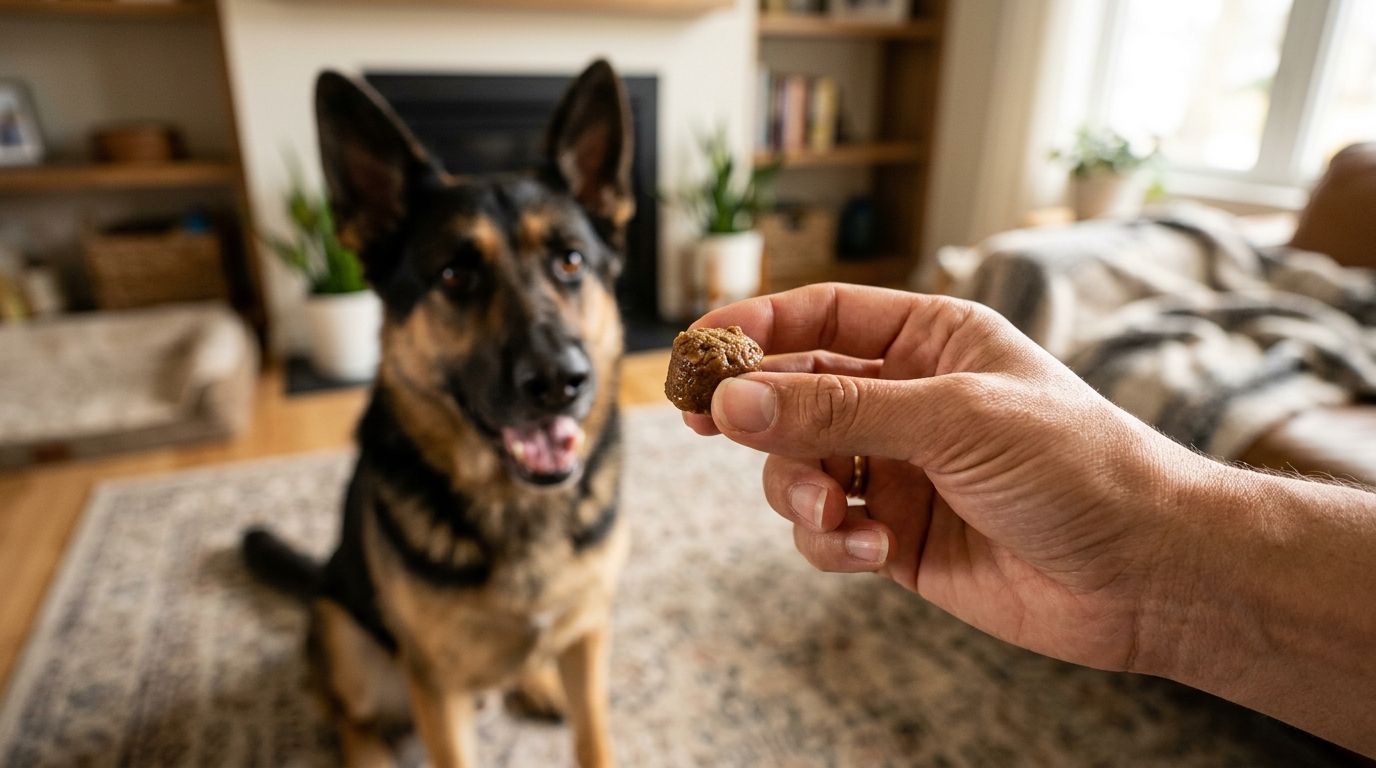
This is one of the most common questions I get, and the answer depends on your specific dog:
Start at age 1-2 if:
- Your GSD comes from a line with known hip dysplasia history
- You plan to do high-impact activities (agility, protection sports, hiking)
- Your vet identified early signs of joint laxity during puppy exams
Start at age 4-5 if:
- Your GSD is healthy with no known joint issues
- They are a pet with normal activity levels
- You want preventive support before problems develop
Start immediately if:
- Your dog is showing any stiffness, limping, or reluctance to jump
- They have been diagnosed with hip or elbow dysplasia
- They are a senior GSD (7+ years)
For most healthy German Shepherds, starting a quality joint supplement around age 4 to 5 as preventive care is the sweet spot.
Supplement Forms: Chews, Powders, or Liquids?
Each form has pros and cons:
- Soft chews - Easiest to give (dogs treat them like snacks), but often contain fillers and sugar
- Powder - Highest concentration of active ingredients, easy to mix into food
- Liquid - Fast absorption, good for picky eaters, but harder to dose accurately
- Capsules - Precise dosing, but many dogs refuse to swallow them
I personally use powder mixed into their regular food because it lets me control the exact dosage without the added sugars and fillers that come in most chew forms.
Do Joint Supplements Actually Work?
I will be honest with you because the internet is full of extreme opinions on both sides.
What the research says:
- Glucosamine and chondroitin have moderate to strong evidence of slowing cartilage degradation in dogs
- Omega-3 fatty acids are proven to reduce joint inflammation
- MSM shows promising results in reducing pain and improving mobility
- Results take 4 to 8 weeks to become noticeable
What supplements cannot do:
- Reverse existing structural damage
- Cure hip dysplasia
- Replace surgery when surgery is needed
- Work overnight
The realistic expectation is this: a good joint supplement given consistently over months will help maintain your dog's mobility, reduce discomfort, and potentially delay the progression of degenerative joint disease. It is not a miracle cure. It is preventive maintenance.
Other Ways to Protect Your GSD's Joints
Supplements are just one part of the picture:
- Keep them at a healthy weight - Every excess pound puts 4 extra pounds of pressure on joints. Managing their weight is the single most impactful thing you can do
- Exercise wisely - Swimming is the best exercise for joint health. Avoid repetitive jumping on hard surfaces
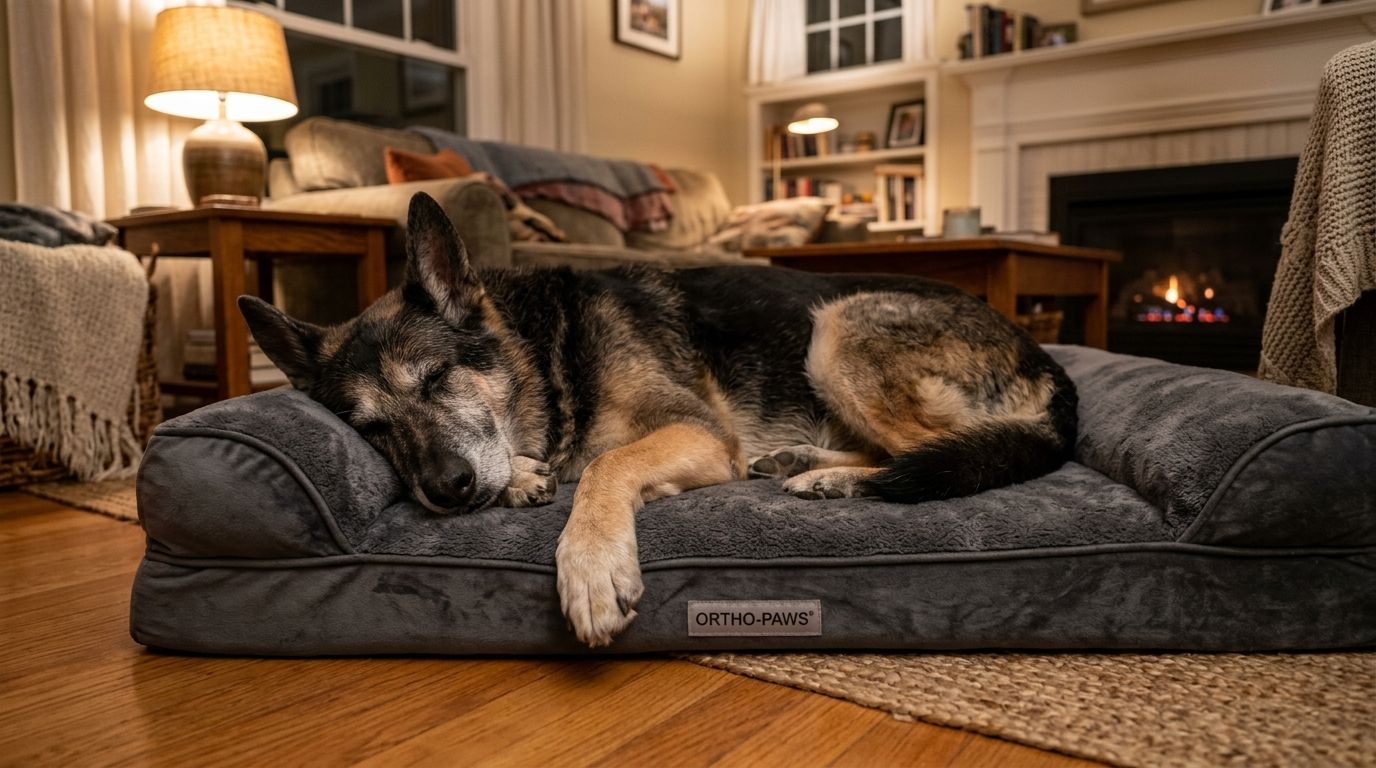
- Provide supportive bedding - Orthopedic memory foam beds make a real difference for aging joints
- Add <a href="https://www.shepherdtips.com/posts/how-to-choose-the-best-salmon-oil-good-for-dogs-in-2025">salmon oil</a> - A high-quality fish oil supplement delivers Omega-3s that fight inflammation from the inside
- Non-slip flooring - Slippery tile and hardwood floors force dogs to splay their legs unnaturally, stressing joints
- Ramps for cars and beds - Stop letting your large breed dog jump in and out of vehicles