If you live with a German Shepherd, you already know: these dogs have opinions, and they're not afraid to share them. But when the whining gets constant - first thing in the morning, during dinner, at bedtime, and seemingly at random - you start to wonder, why do German Shepherds whine so much?
The short answer: German Shepherds whine because they're one of the most communicative dog breeds alive. The longer answer involves biology, training, emotion, and sometimes health. Let's break it all down.
1. Whining Is Their Primary Language

Unlike breeds that rely mostly on body language, German Shepherds are wired to be vocal communicators. They were bred to work closely with human handlers, and whining became one of their most effective tools.
A German Shepherd's whine can mean dozens of different things:
- "I need to go outside"
- "I'm bored and need stimulation"
- "Something is wrong"
- "Pay attention to me right now"
- "I'm excited and can't contain it"
Think of whining as your GSD's native language. They aren't being annoying - they're talking to you. The challenge is learning to interpret what each whine means.
2. Why Do German Shepherds Whine for Attention?
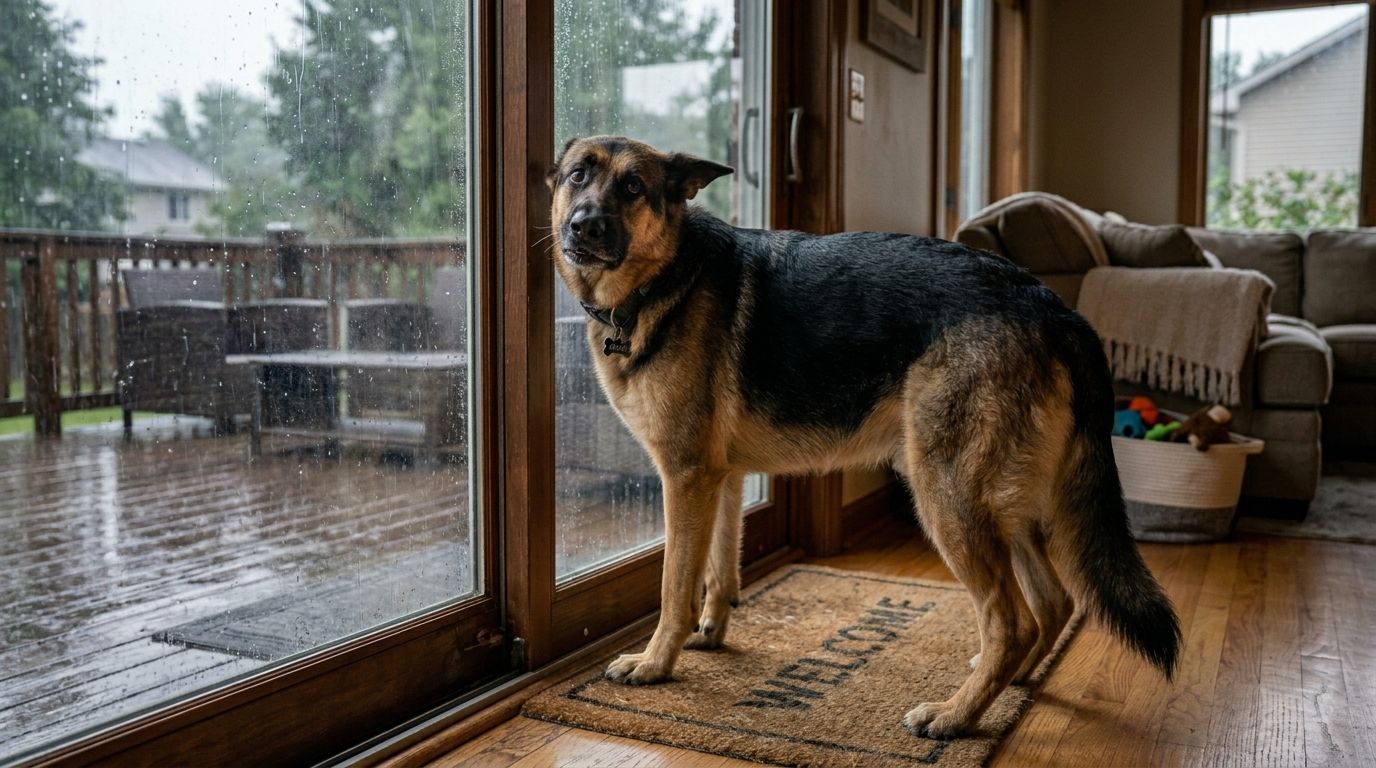
The number one reason German Shepherds whine so much is simple: it works. At some point, your GSD whined and you responded - with a look, a word, a pet, or a treat. That single response taught them that whining = attention.
German Shepherds are incredibly observant. They notice patterns humans don't even realize they're creating:
- Soft whine → owner looks over → jackpot!
- Louder whine → owner says "What?" → even better!
- Sustained whine → owner gets up → ultimate victory!
How to handle attention-seeking whining:
- Completely ignore the whining (no eye contact, no words, no touch)
- Wait for 3 seconds of silence, then reward the quiet
- Be consistent - if one family member gives in, the whining gets reinforced
- Teach a "quiet" command paired with treats for silence (if the whining happens in a crate, see our step-by-step crate whining guide)
This isn't cruel - it's communication. You're teaching your GSD that silence gets attention, not whining.
3. They're Experiencing Anxiety or Stress
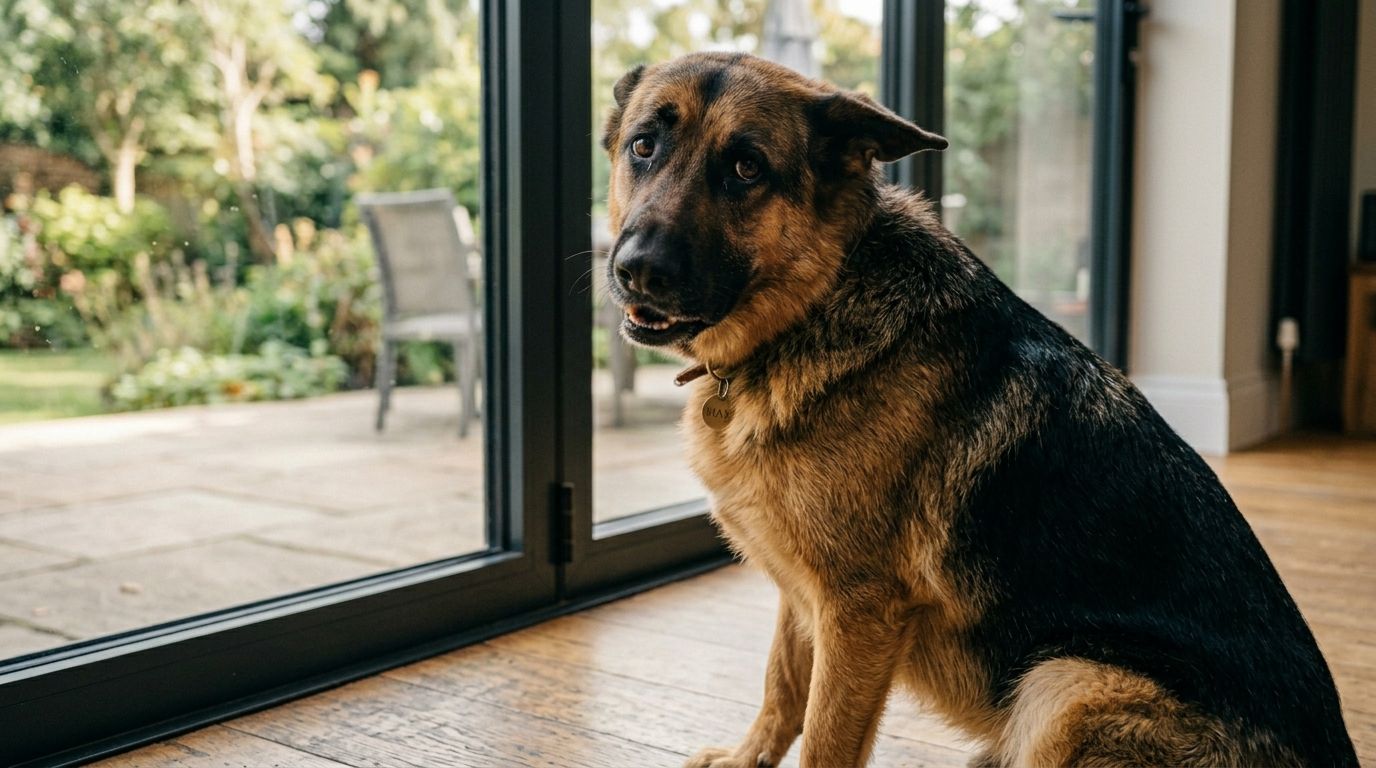
German Shepherds form incredibly deep bonds with their owners, and that attachment can turn into separation anxiety when you're away - or even when you leave the room.
Anxiety-driven whining sounds different from attention-seeking whining:
- It's higher-pitched and more urgent
- It often escalates into pacing, panting, or destructive behavior
- It starts when you pick up keys, put on shoes, or head toward the door
- It continues (and worsens) after you leave
Signs your GSD's whining is anxiety-related:
- Whining when left alone, even briefly
- Following you from room to room while whining
- Excessive drooling or panting alongside the whining
- Destructive behavior when left home (chewing doors, scratching floors)
If your German Shepherd whines primarily when you're leaving or absent, work on desensitization training. The ASPCA separation anxiety guide has a solid graduated approach. Our guide on desensitizing a dog to strangers uses a similar graduated approach that works well for separation issues too: practice short departures, reward calm behavior during separations, and consider consulting a professional trainer.
4. Physical Pain or Discomfort
This is the important one. Sometimes, German Shepherds whine because something hurts.
German Shepherds are prone to several painful conditions:
- Hip dysplasia - whining when rising from rest or climbing stairs
- Elbow dysplasia - whining when bearing weight after rest
- <a href="https://www.shepherdtips.com/posts/bloat-in-dogs">Bloat (GDV)</a> - whining with restlessness, a swollen belly, and pacing (this is an emergency)
- Ear infections - whining while pawing at ears or shaking head
- Dental pain - whining while eating or chewing
Red flags that whining indicates pain:
- The whining is new and wasn't a previous habit
- It happens during specific movements (getting up, lying down, jumping)
- It's accompanied by other symptoms (limping, lethargy, loss of appetite)
- Your dog yelps or flinches when touched in a specific area
- The whining occurs at night when they're trying to get comfortable
Rule of thumb: If your German Shepherd's whining pattern has suddenly changed or intensified without an obvious behavioral cause, schedule a vet visit. GSDs are stoic dogs who often hide pain - if they're whining about it, it may be significant.
5. Excitement and Overstimulation
Not all whining is negative. German Shepherds also whine when they're ridiculously excited about something.
Common excitement triggers:
- You picking up the leash
- Another dog appearing on a walk
- Family members coming home
- Car rides
- Mealtime preparation
- The word "walk," "park," or "treat"
Excitement whining is typically:
- High-pitched and accompanied by jumping or spinning
- Short-lived (stops once the exciting thing happens)
- Paired with a wagging tail and overall happy body language
- More common in younger GSDs (under 3 years)
How to manage excitement whining:
- Practice "nothing in life is free" - your GSD must sit calmly before getting what they want
- Avoid building anticipation (don't announce walks 10 minutes before leaving)
- Reward moments of calm during exciting situations
- Use impulse control exercises daily
6. They Need Something Specific
Sometimes, the answer to why German Shepherds whine is straightforward: they need something and they're telling you about it.
Common needs communicated through whining:
- Need to go outside to potty
- Water bowl is empty
- They're hungry (feeding schedule disrupted)
- They're too hot or too cold
- A toy is stuck under the furniture
- They want access to a room you've closed off
Before assuming your GSD is whining "for no reason," run through the checklist:
- ✅ Have they been outside recently?
- ✅ Is fresh water available?
- ✅ Have they been fed on schedule?
- ✅ Is the temperature comfortable?
- ✅ Have they had exercise and mental stimulation?
Often, resolving the underlying need stops the whining immediately.
7. Why Do German Shepherds Whine So Much More Than Other Breeds?
If you've owned other dogs before a GSD, the difference in vocal output is startling. Why do German Shepherds whine so much compared to, say, a Labrador or a Beagle?
Breed-specific factors:
- Herding heritage - They were bred to communicate constantly with handlers using vocalizations
- Intelligence - Smarter dogs develop more complex communication strategies
- Emotional sensitivity - GSDs are deeply empathetic and react strongly to human emotions
- Bond strength - The deeper the bond, the more they "talk" to you
- Expressiveness - GSDs have an unusually wide vocal range (whines, groans, barks, howls, grumbles, "talking")
A German Shepherd who never whines would actually be unusual for the breed. Some degree of vocal expression is not only normal - it's a sign of a healthy, bonded, intelligent dog.
When Whining Becomes a Problem
While whining is natural for German Shepherds, it can become excessive. Here's when to intervene:
| Normal Whining | Excessive Whining |
|---|---|
| Communicates a specific need | Constant, without clear trigger |
| Stops when the need is met | Continues regardless of response |
| Occasional throughout the day | Nearly non-stop |
| Dog is otherwise healthy and happy | Paired with anxiety, aggression, or lethargy |
Steps to reduce excessive whining:
- Rule out medical causes with a vet visit
- Increase daily exercise (minimum 2 hours)
- Add mental enrichment (puzzle toys, nose work)
- Stop rewarding whining with any form of attention
- Consistently reward quiet, calm behavior
- Consider professional help for anxiety-driven whining