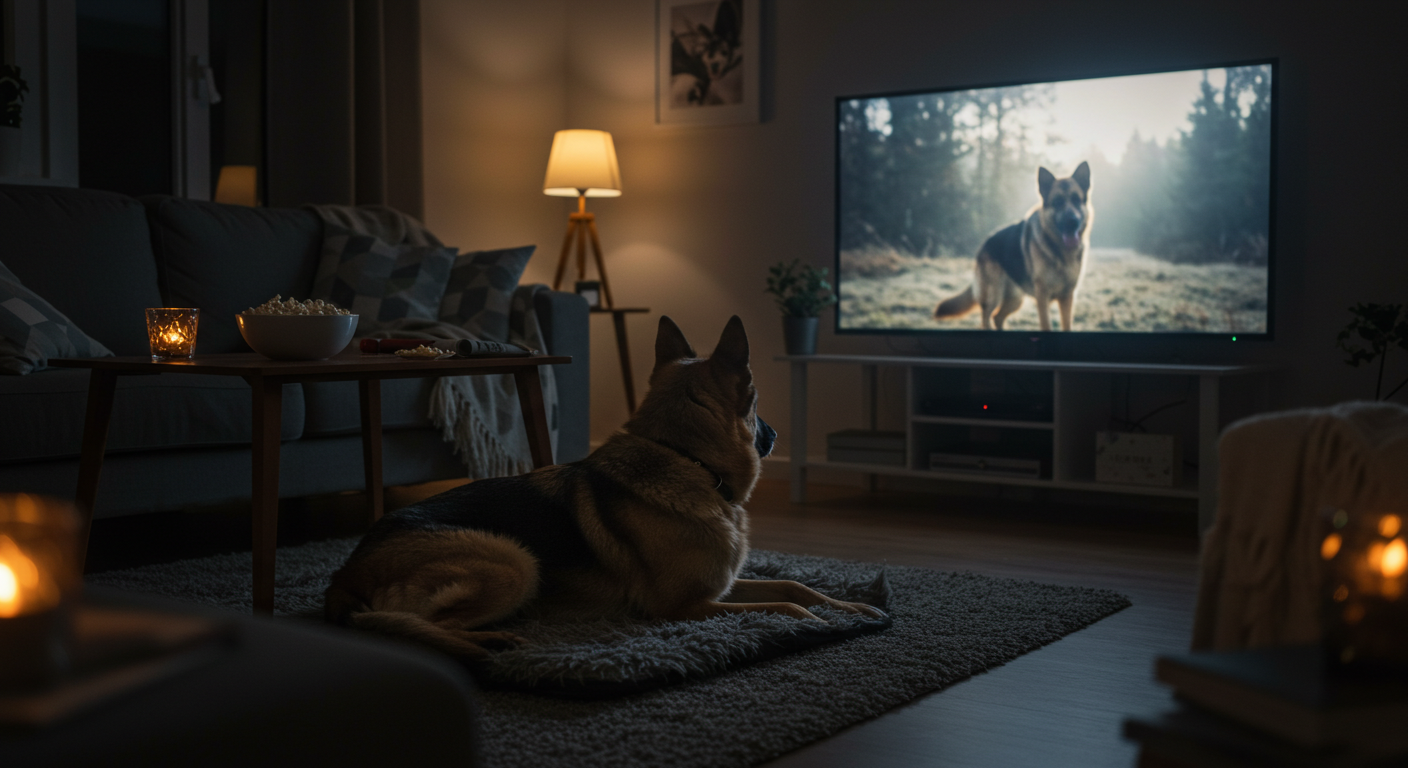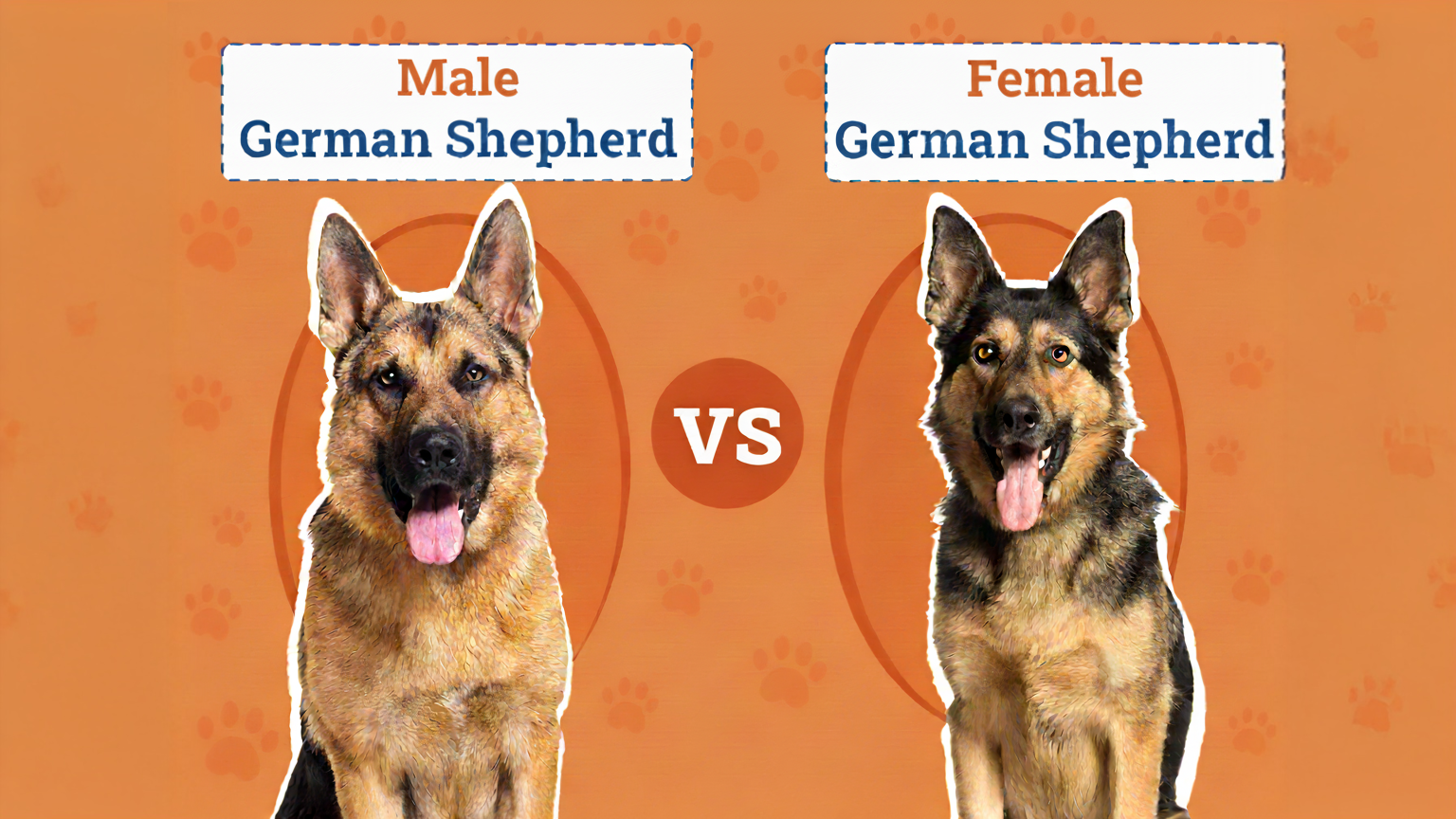
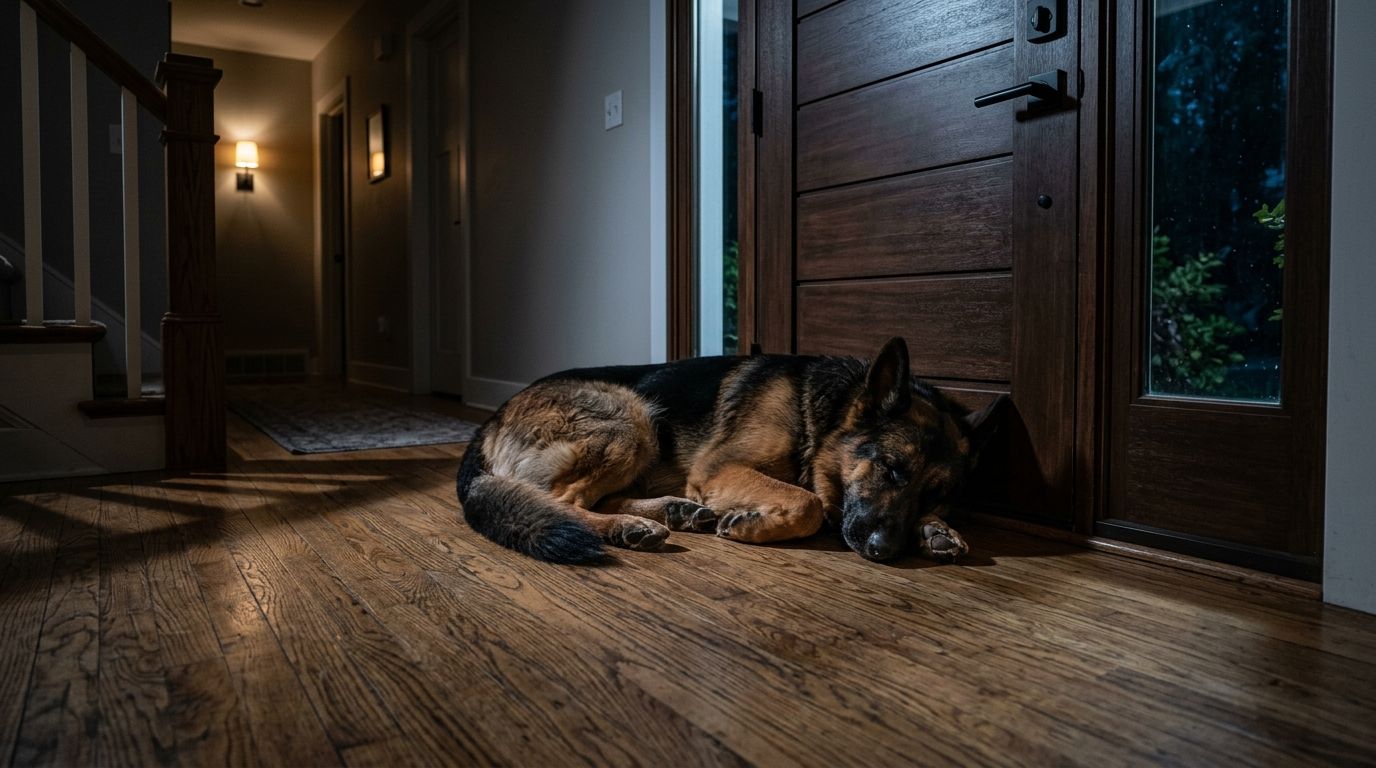
Every night, same routine. I finish locking up, turn off the lights, head to bed - and there's my German Shepherd, already stationed at the front door like she's been assigned a post.
She has a perfectly good dog bed. A crate she actually loves. She even has couch privileges (don't judge). But she chooses the cold hardwood floor in front of the door. Every. Single. Night.
Why does my German Shepherd sleep by the door? I spent months thinking something was wrong before I realized she was doing exactly what her breed was built to do.
1. Guarding Instinct - It's in Their DNA
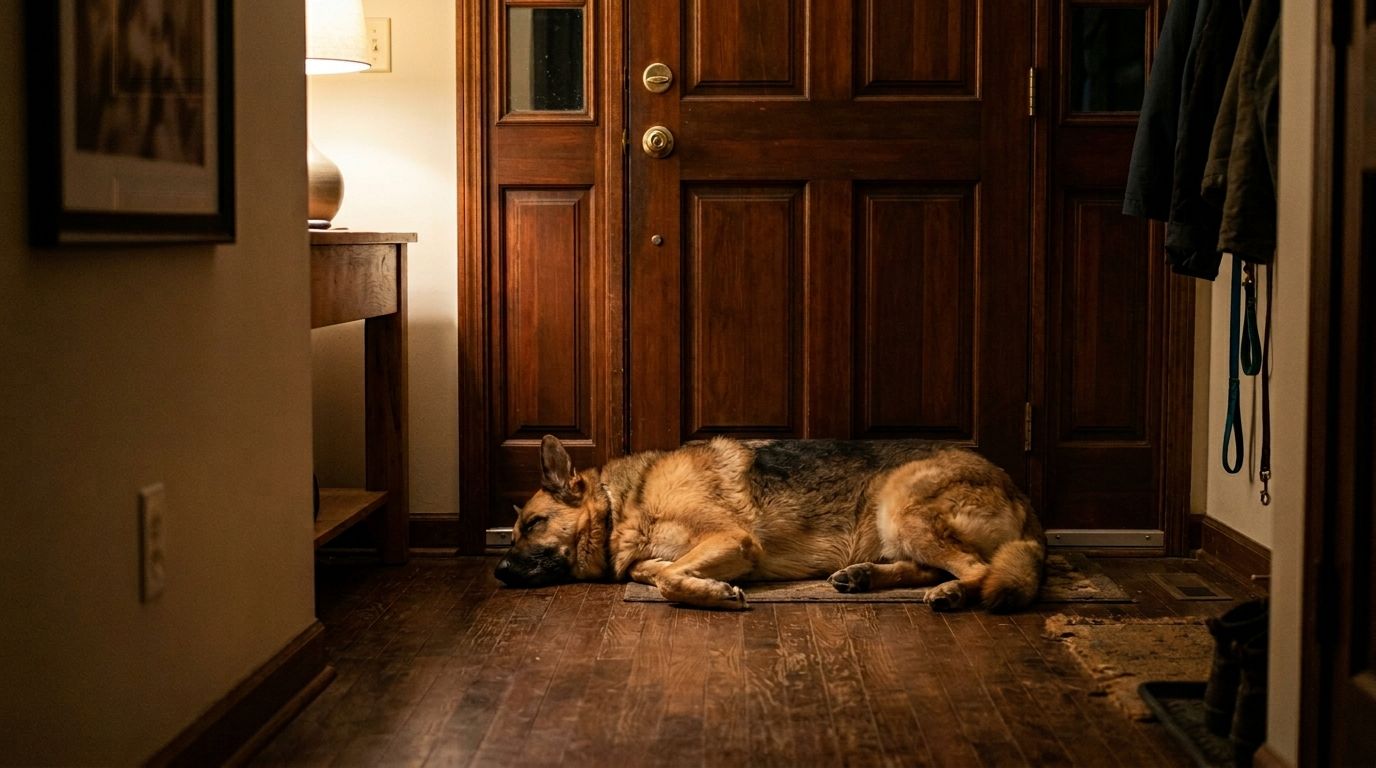
The most straightforward explanation is also the most powerful one: your German Shepherd sleeps by the door because they're guarding your home.
German Shepherds were originally bred as sheep-guarding dogs in Germany during the 1890s. Captain Max von Stephanitz developed the breed specifically for intelligence, loyalty, and protectiveness. That legacy is why GSDs remain the top security and protection dogs to this day. That protective drive didn't disappear when they moved from sheep pastures to living rooms.
When your GSD parks themselves at the front door, they've assessed the house layout and identified the most vulnerable entry point. They're not sleeping there randomly - they've chosen a strategic position. In their mind, they're the first line of defense between your family and whatever might come through that door.
This isn't anxious behavior. It's calm, purposeful, and deeply rooted in breed instinct. A German Shepherd who sleeps by the door with a relaxed body and easy breathing is simply doing their job.
2. They Can Hear and Smell What You Can't
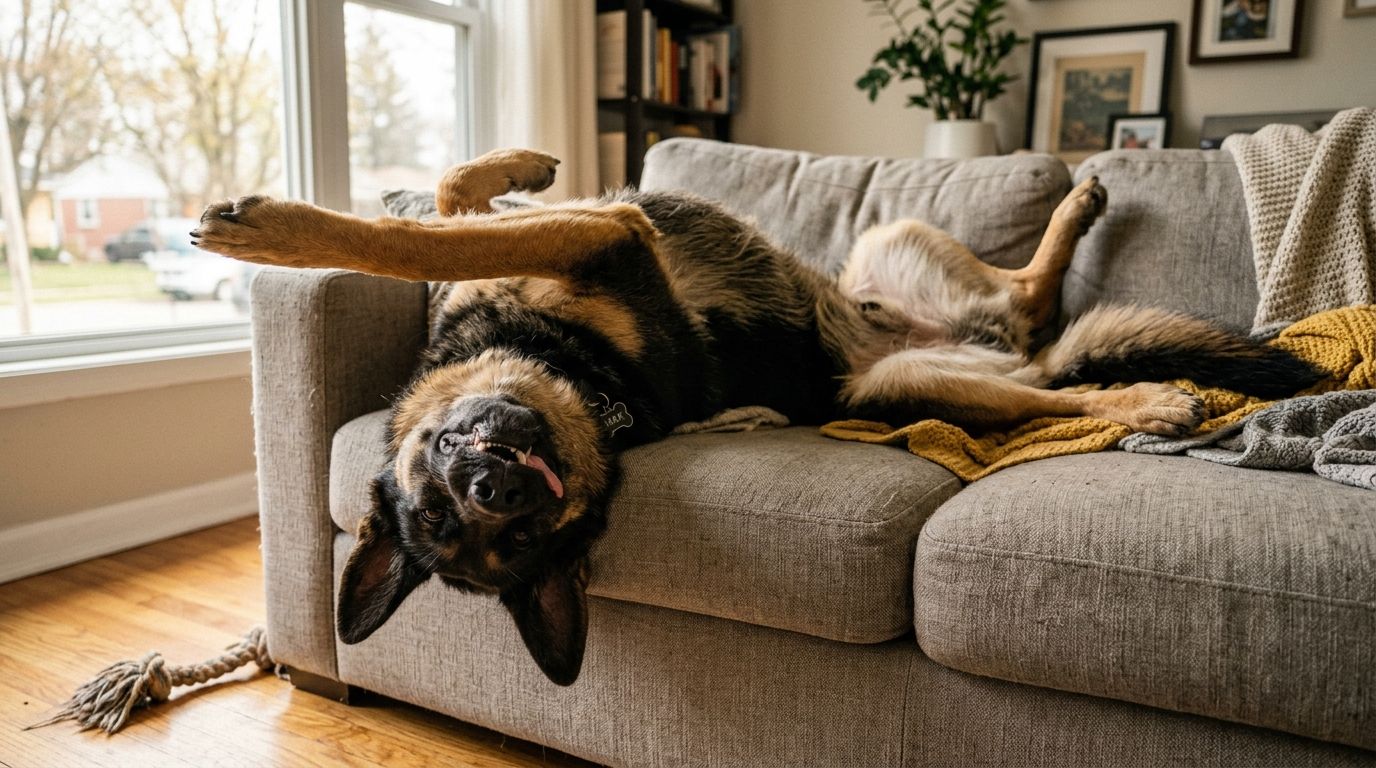
Your German Shepherd's nose is roughly 100,000 times more sensitive than yours. Their hearing extends to 65,000 Hz, compared to your 20,000 Hz. The front door is the biggest gap between inside and outside sounds and smells.
By sleeping near the door, your GSD positions themselves at the intersection of two worlds: the safe interior they protect and the unpredictable exterior they monitor. From that spot, they can:
- Detect approaching footsteps long before a knock
- Smell animals, people, or weather changes outside
- Monitor both the entryway and the hallway behind them
- React quickly to any disturbance
I tested this once by having a friend approach my front door at 2 AM (without knocking). My German Shepherd's head snapped up when the friend was still 30 feet from the porch. She knew someone was there a full 45 seconds before I would have heard anything.
3. Waiting for Someone to Come Home
This one hits different if you've seen it. Sometimes, your German Shepherd sleeps by the door because they're waiting for a family member who hasn't returned yet.
If your household has staggered schedules - one person works late, a teenager is out with friends - your GSD may position themselves at the door until everyone is "accounted for." Only once the whole pack is home will they relocate to their usual sleeping spot.
My GSD did this every Thursday when my partner worked late shifts. She'd lie by the door from 8 PM onward, ears swiveling at every car sound, until she heard the right engine pull into the driveway. Ten seconds later, she'd be at her bed like nothing happened.
German Shepherds are pack animals. An incomplete pack is a problem that needs monitoring, and the door is where the missing member will reappear.
4. Separation Anxiety
Not all door-sleeping is healthy. If your German Shepherd sleeps by the door only when you leave (and shows distress while doing it), the behavior may indicate separation anxiety.
Door-sleeping from anxiety vs. guarding instinct:
| Guarding (Normal) | Anxiety (Concern) |
|---|---|
| Calm, relaxed body posture | Tense, panting, or pacing |
| Happens whether you're home or not | Only happens when you're gone |
| Dog sleeps soundly | Dog whines, scratches at the door, or stays awake |
| No destructive behavior | May chew door frame, scratch floors |
| Dog can be called away easily | Dog refuses to leave the door area |
If your GSD's door-sleeping is accompanied by whining, drooling, scratching, or destructive behavior, it's worth addressing with a professional trainer or veterinary behaviorist. Separation anxiety is treatable, but it requires a structured approach - not just telling your dog to move.
Quick test: If you can call your German Shepherd away from the door with a treat or a toy and they happily relocate, it's guarding behavior. If they go right back to the door the moment you stop engaging them, or refuse to leave entirely, anxiety is more likely the driver.
5. Temperature and Airflow
Doors - especially front doors - often have drafts. In warmer months, that draft of cooler air can be incredibly appealing to a German Shepherd carrying 2-3 inches of dense double coat.
Clues that temperature is the motivation:
- The behavior increases in summer and decreases in winter
- Your GSD also seeks out tile floors, bathroom floors, or A/C vents
- They position themselves on the side of the door where the draft comes through
- They sprawl out rather than curling up (sprawling = trying to cool down)
Simple fix: provide a cool resting spot with better airflow somewhere else in the house. An elevated cooling bed near a fan often does the trick.
6. They've Learned the Routine
German Shepherds are creatures of habit, and sometimes the explanation is just routine reinforcement. At some point, your dog slept by the door once - maybe as a puppy, maybe out of curiosity - and it became their spot.
Dogs develop location preferences based on early positive experiences. If your GSD felt safe, comfortable, or got positive attention (you stepping over them, greeting them in the morning) while sleeping by the door, they filed that spot as "good."
I've seen this with my own dogs. A behavior that started as a random choice became a nightly ritual simply because nothing negative happened there and the experience was generally positive.
7. Resource Guarding the Exit
In multi-dog households, a German Shepherd sleeping by the door might be practicing a subtle form of resource guarding - in this case, the resource is access to the most important entry/exit point.
By controlling the door, your GSD controls who comes and goes. This isn't necessarily aggressive. It's positional control, the same instinct that makes some dogs guard food bowls or favorite toys.
Signs this might be the case:
- Your GSD blocks other pets from approaching the door
- They stiffen or give hard stares when another dog walks past their door spot
- The behavior started after introducing a new pet to the household
- They're relaxed when they're the only pet but tense at the door in a multi-dog home
If this is happening, work with a trainer on resource-guarding protocols. It's manageable, but it can escalate if ignored.
8. They Just Like That Spot
I know this sounds anticlimactic after all the behavioral analysis, but sometimes a spot is just a spot. Dogs, like people, develop preferences for sleeping locations that don't always have a deep psychological explanation.
Maybe the floor has the right temperature. Maybe the acoustics are soothing. Maybe they like the view down the hallway. Maybe they claimed it as a puppy and it just stuck.
If your German Shepherd is relaxed, healthy, and shows no signs of anxiety or aggression while sleeping by the door - and all their other needs are being met - then there may simply not be a "problem" to solve.
Should You Move Your German Shepherd Away From the Door?
This depends entirely on the motivation:
Leave them alone if:
- They're calm and relaxed at the door
- They sleep soundly and can be woken normally
- They choose the spot voluntarily but will move if asked
- No signs of anxiety or aggression are present
- The behavior doesn't interfere with household routines
Intervene if:
- The behavior is driven by separation anxiety
- They scratch, chew, or damage the door/frame
- They guard the door aggressively from other pets or family members
- They seem restless, not truly sleeping
- The floor surface is causing joint issues (hard floors + senior GSD = sore joints)
How to redirect if needed:
- Place their dog bed in a nearby location with a similar vantage point
- Use "place" training to teach them to go to their bed on command
- Make the alternative spot more appealing (familiar blanket, proximity to you)
- Be patient - changing a routine behavior in a GSD takes 2-4 weeks of consistency