When my German Shepherd started shaking her head at 3 a.m., I knew something was off. By morning, she was scratching her right ear so hard she drew blood. Inside the ear flap was a dark, waxy buildup with a smell that could clear a room.
It was her first ear infection. I panicked and called the vet, but they couldn't see her until the following day. In the meantime, my vet walked me through some at-home steps over the phone. That experience taught me that while serious ear infections need professional treatment, there's a lot you can do at home to manage mild cases and prevent them from getting worse.
Here's my complete guide on how to treat dog ear infection without vet intervention, when it's safe to try, and the clear warning signs that mean professional help is the only option.
Why German Shepherds Get Ear Infections
You might think German Shepherds would be safe from ear infections because they have upright ears. Good air circulation should keep things dry, right? Mostly, yes. GSDs do get fewer ear infections than floppy-eared breeds like Cocker Spaniels. But they're not immune. Understanding how to treat dog ear infection without vet help starts with knowing why your GSD might develop one in the first place.
Reasons your German Shepherd might develop an ear infection:
Allergies. This is the number one cause. German Shepherds are prone to skin and food allergies, and the ear canal is essentially an extension of the skin. When allergens trigger inflammation, the ear environment changes, creating a breeding ground for yeast and bacteria.
Water exposure. Dogs who love swimming or get bathed frequently without proper ear drying are at higher risk. Trapped moisture in the ear canal is bacteria's best friend.
Excessive wax buildup. Some dogs produce more earwax than others. Without regular cleaning, that wax becomes a warm, moist environment where infection thrives.
Ear mites. More common in puppies than adults, ear mites cause intense irritation and secondary bacterial infections.
Foreign objects. Grass seeds, foxtails, and small debris can lodge in the ear canal, especially in dogs who explore wooded or grassy areas.
Signs Your Dog Has an Ear Infection
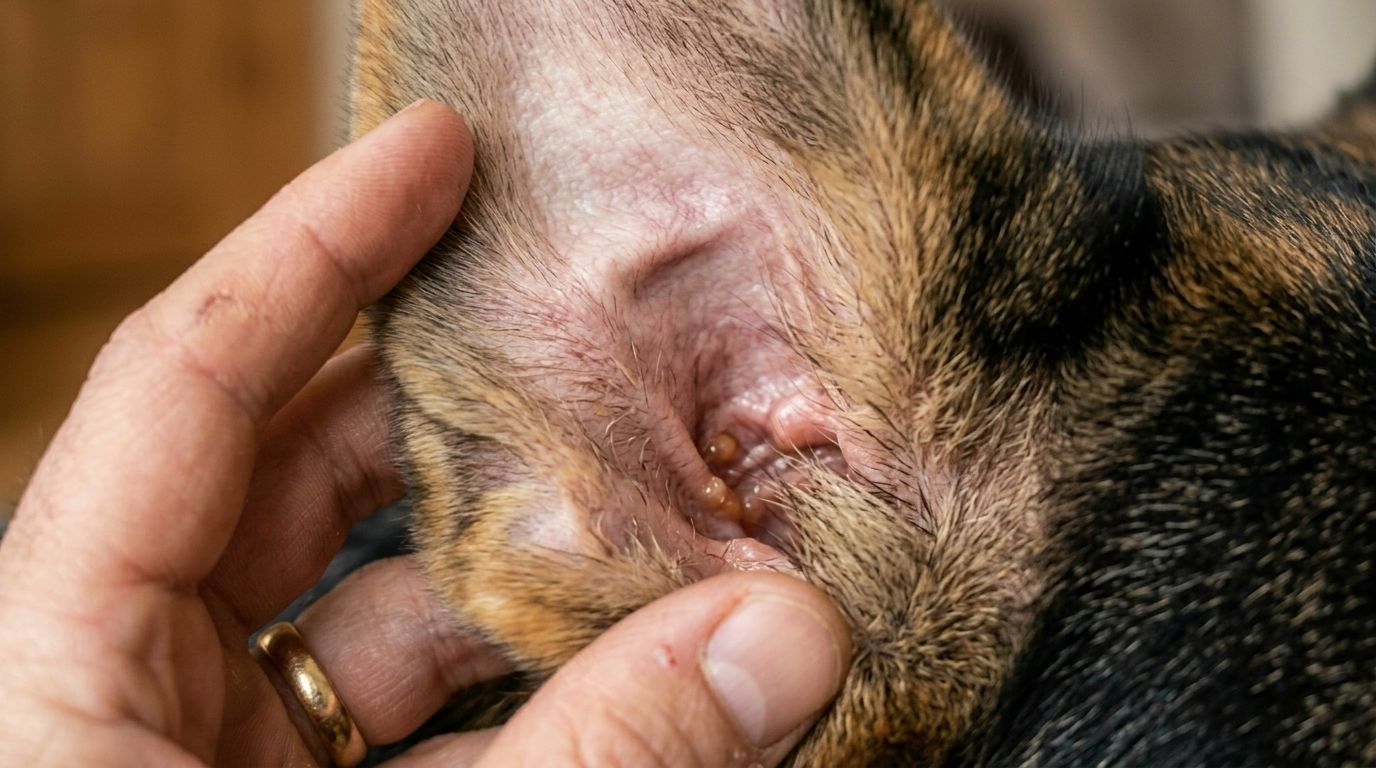
Before you try any home treatment, make sure you're actually dealing with an ear infection and not something that requires immediate veterinary attention.
| Symptom | What It Looks Like | Severity |
|---|---|---|
| Head shaking | Frequent, vigorous shaking focused on one side | Mild to Moderate |
| Scratching at ear | Pawing or rubbing ear against furniture/floor | Mild to Moderate |
| Odor | Yeasty, musty, or foul smell from the ear | Moderate |
| Discharge | Brown, yellow, or dark waxy buildup | Moderate |
| Redness and swelling | Visible inflammation inside the ear flap | Moderate |
| Pain response | Whimpers or pulls away when ear is touched | Moderate to Severe |
| Head tilt | Persistent tilting to one side | Severe |
| Loss of balance | Stumbling, circling, or falling | Severe, vet immediately |
Warning: If your dog shows a head tilt, loss of balance, hearing changes, or the ear is severely swollen and painful, do not attempt to treat dog ear infection without vet care. These signs suggest a middle or inner ear infection that requires veterinary antibiotics and possibly imaging. As the AKC notes, untreated inner ear infections can cause permanent damage. Home remedies only apply to mild outer ear infections (otitis externa).
How to Treat Dog Ear Infection Without Vet: Step-by-Step
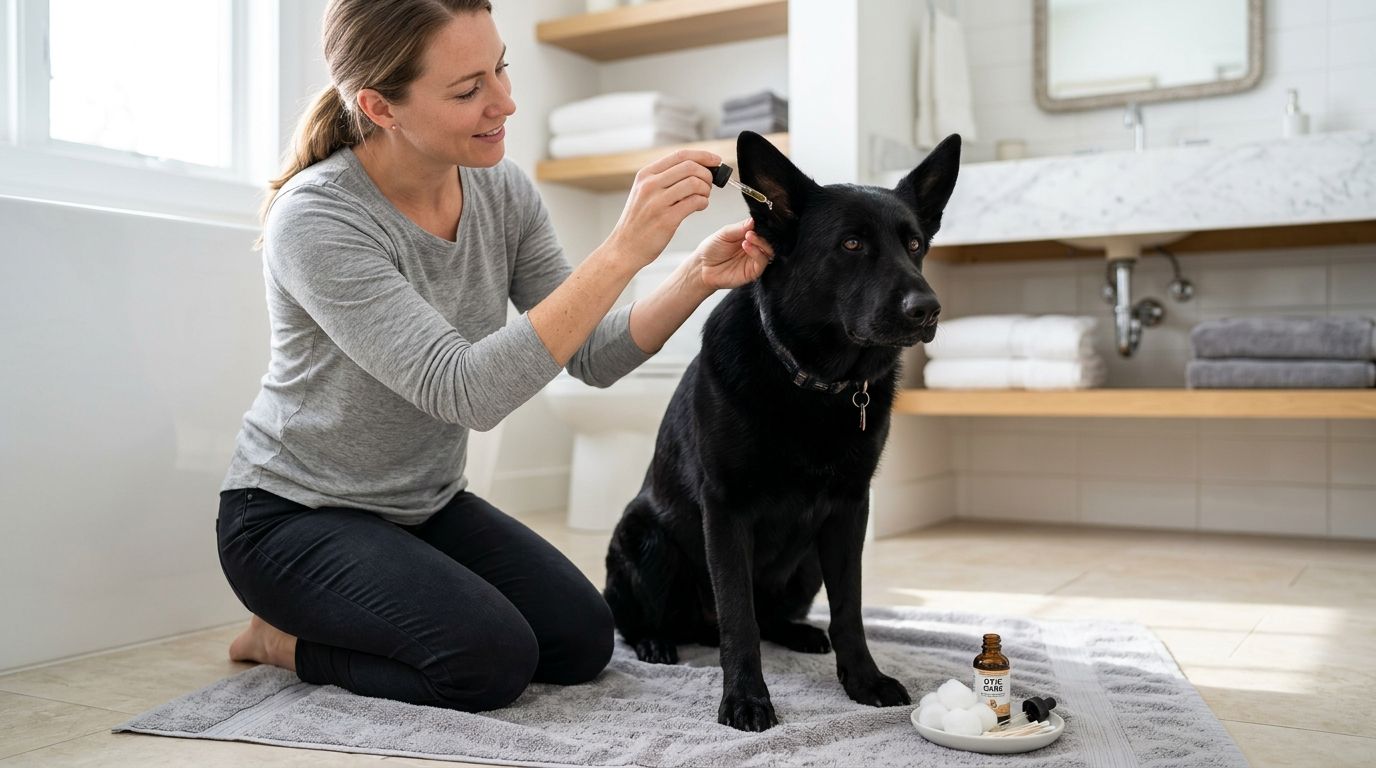
If your dog has mild redness, some wax buildup, and light scratching without severe pain, here's how to treat dog ear infection without vet intervention. This mirrors what my vet recommended over the phone during that first 3 a.m. ear-shaking episode.
Step 1: Gather Your Supplies
- Vet-approved ear cleaning solution (enzymatic cleaners work best)
- Cotton balls or gauze pads (never cotton swabs)
- Towel to protect yourself from head shaking
- Treats for positive reinforcement
Step 2: Examine the Ear
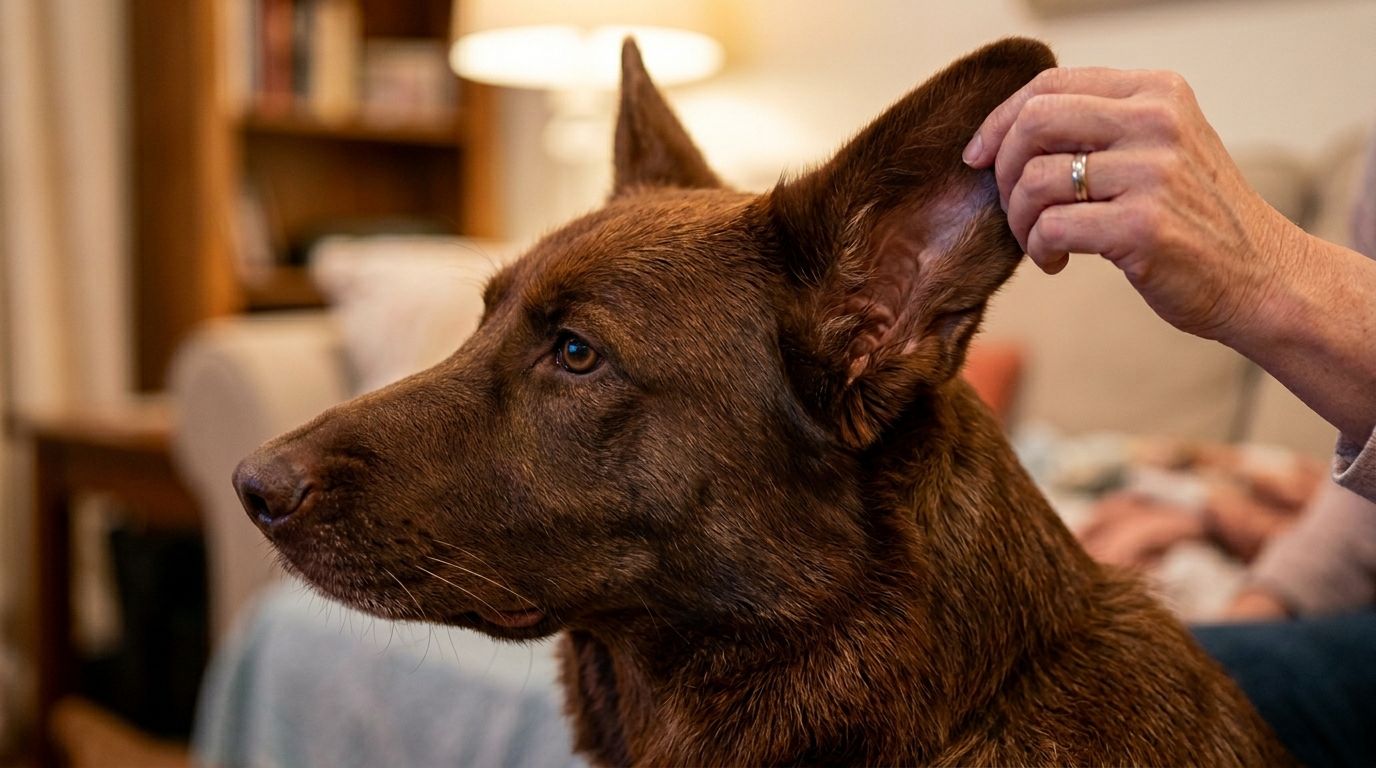
Gently lift the ear flap and look inside. Healthy ears are pale pink with minimal wax. Infected ears will show redness, excess discharge, and often smell bad. If you see a dark, coffee-ground-like material, ear mites are likely, and that's a vet visit, not a home job.
Step 3: Clean the Ear Properly
Fill the ear canal with the cleaning solution until you can see liquid at the opening. Don't be shy. You need enough solution to actually flush the debris.
Massage the base of the ear for 20-30 seconds. You'll hear a squishing sound. This breaks up wax and debris deep in the canal.
Let your dog shake. They will. This is where the towel saves your walls. The shaking expels solution and loosened debris.
Wipe the visible parts of the ear flap and outer canal with cotton balls. Don't push anything into the ear canal itself.
Step 4: Apply a Soothing Agent (Optional)
A thin layer of coconut oil on the visible inner ear flap can soothe mild irritation. Some owners use a 50/50 mix of apple cider vinegar and water as a rinse, but only if the skin isn't broken or raw. Vinegar on broken skin causes pain and makes things worse.
Step 5: Monitor and Repeat
Clean the ears once daily for 5-7 days. You should see improvement within 2-3 days. If there's no change, or if symptoms worsen, stop home treatment and see your vet.
Home Remedies: What Works and What Doesn't
The internet is full of dog ear infection home remedies, and not all of them are safe. Here's an honest breakdown.
| Remedy | Verdict | Notes |
|---|---|---|
| Vet-grade ear cleaner | Best option | Enzymatic formulas dissolve wax effectively |
| Coconut oil (topical) | Helpful for mild irritation | Anti-microbial properties, soothes dry skin |
| Apple cider vinegar (diluted) | Use with caution | Only on intact skin, never in ruptured or raw ears |
| Hydrogen peroxide | Avoid | Can damage healthy tissue and delay healing |
| Rubbing alcohol | Avoid | Causes severe burning, especially on inflamed tissue |
| Olive oil or mineral oil | Mild soothing | Can soften wax but won't treat infection |
The honest truth: knowing how to treat dog ear infection without vet involvement only works for mild outer ear irritation. Home remedies cannot cure a bacterial or yeast infection that's taken hold. If your dog's ears don't improve within 3-5 days of home care, the infection has progressed past what cleaning alone can fix. The ASPCA considers chronic ear infections one of the most common conditions requiring veterinary dermatology.
Prevention: How to Stop Ear Infections Before They Start
I clean my German Shepherd's ears weekly, and she hasn't had an ear infection since that first one. Prevention is simpler than treatment and takes about 5 minutes.
Dry ears after water exposure. Every time your dog swims or gets bathed, dry the inside of their ears with a cotton ball. Just absorb the excess moisture.
Weekly ear checks. Lift the flap, look for redness, smell for yeast. Catching problems early means they never become full infections.
Address allergies at the source. If your GSD gets recurring ear infections, allergies are almost certainly the root cause. Dietary changes, environmental management, and sometimes antihistamines can break the cycle. Our guide on German Shepherd skin and allergy issues covers this in detail.
Don't over-clean. Weekly is enough for most dogs. Over-cleaning strips the ear of protective oils and can actually increase infection risk.
Manage diet. Yeast thrives on sugars and carbohydrates. Dogs on high-carb diets sometimes experience more yeast-related ear infections. A quality diet for German Shepherds with balanced ingredients can help.
When You Absolutely Need the Vet
Home treatment has limits. Here are the situations where you need professional help, no debate:
- The ear infection hasn't improved after 5-7 days of home care
- Your dog cries or snaps when you touch the ear (severe pain)
- You notice pus or blood-tinged discharge
- Your dog develops a head tilt or balance problems
- Both ears are infected simultaneously
- Your dog has had more than two ear infections in six months (this suggests an underlying condition like allergies or hormonal imbalance)
- You suspect a foreign object is lodged in the ear canal
Your vet will likely perform a cytology test to identify whether the infection is bacterial, yeast, or mixed. This matters because bacterial infections need antibiotics, yeast infections need antifungals, and using the wrong treatment wastes time while your dog suffers.