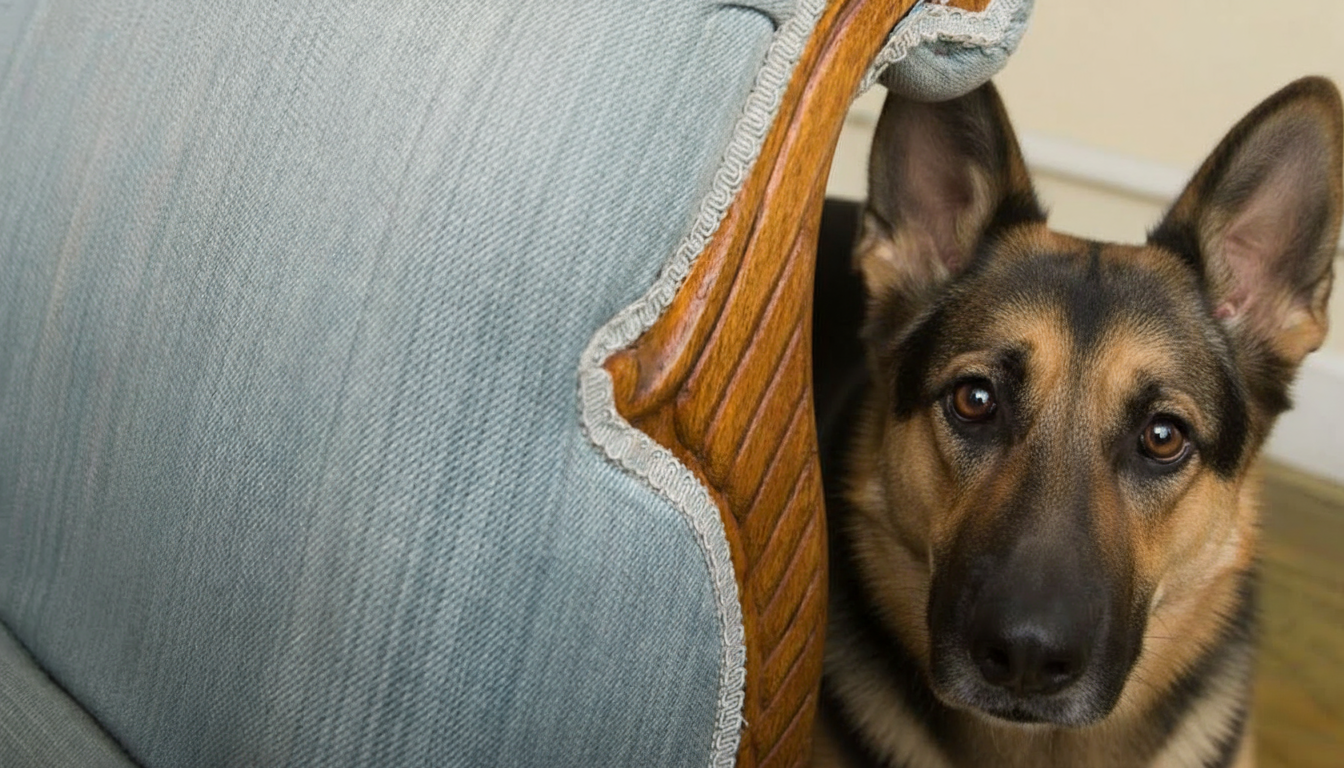
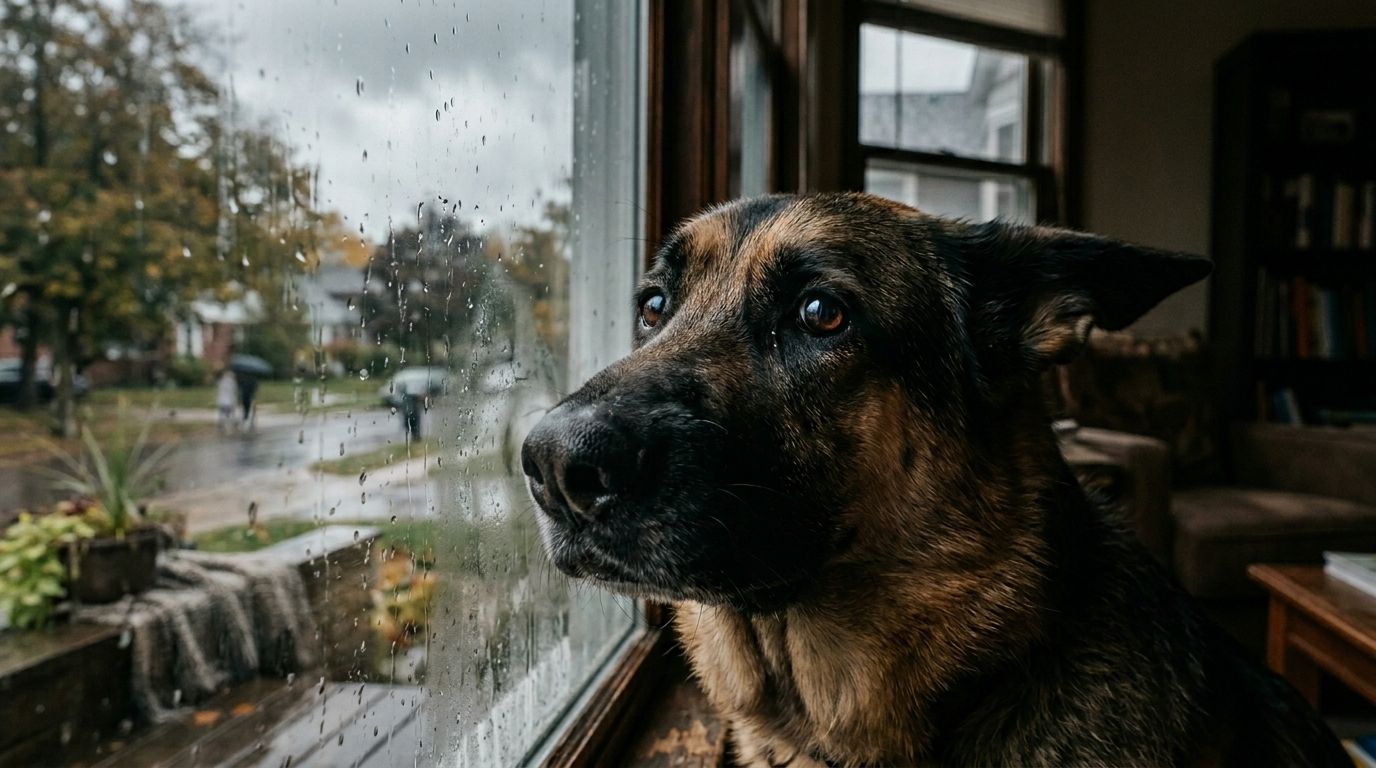
There is a difference between a dog that misses you and a dog that panics when you leave. My German Shepherd used to fall into the second category. I came home one afternoon to a shredded couch cushion, scratch marks on the front door, and a dog covered in drool. That was not boredom. That was full-blown separation anxiety.
If your GSD is destroying things, barking for hours, or having accidents in the house only when you are gone, this is for you.
What Does Separation Anxiety Actually Look Like?
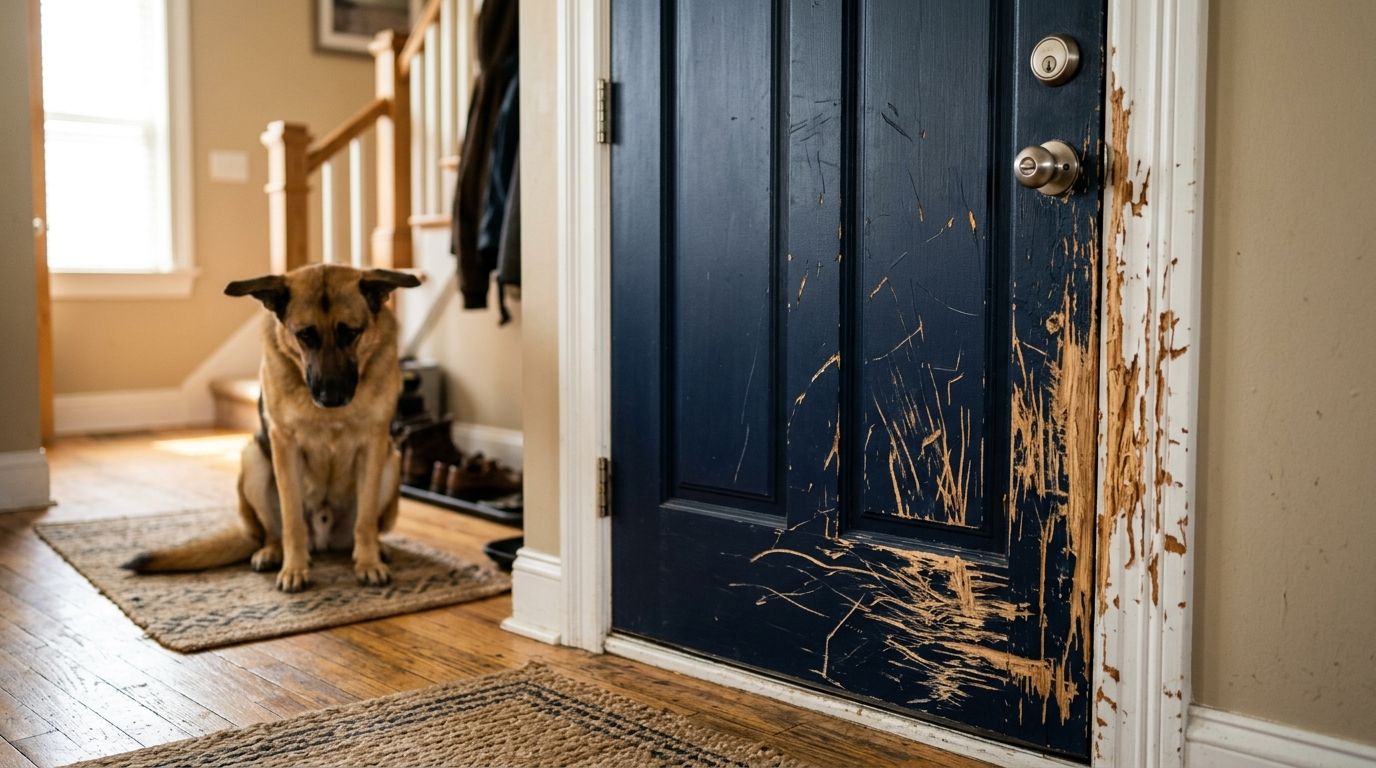
Separation anxiety is not just whining when you grab your keys. It is a genuine panic response. Here is how to tell the difference between normal "I miss you" behavior and clinical separation anxiety:
| Behavior | Normal | Separation Anxiety |
|---|---|---|
| Whining when you leave | Brief, stops within 5 minutes | Continuous, escalating, lasts 30+ minutes |
| Following you around the house | Casual, relaxed | Frantic, shadows your every step |
| Destructive behavior | Occasional, random objects | Focused on exits (doors, windows, crates) |
| Barking or howling | Occasional, triggered | Nonstop, neighbor complaints |
| House accidents | Rare, usually medical | Every time you leave, despite being house-trained |
| Drooling or panting | Normal levels | Excessive, soaking wet chest |
| Escape attempts | None | Scratching doors, breaking through windows |
If your dog is sleeping by the door and seems restless when you get ready to leave, those can be early warning signs that separation anxiety is developing.
Why German Shepherds Are Especially Vulnerable
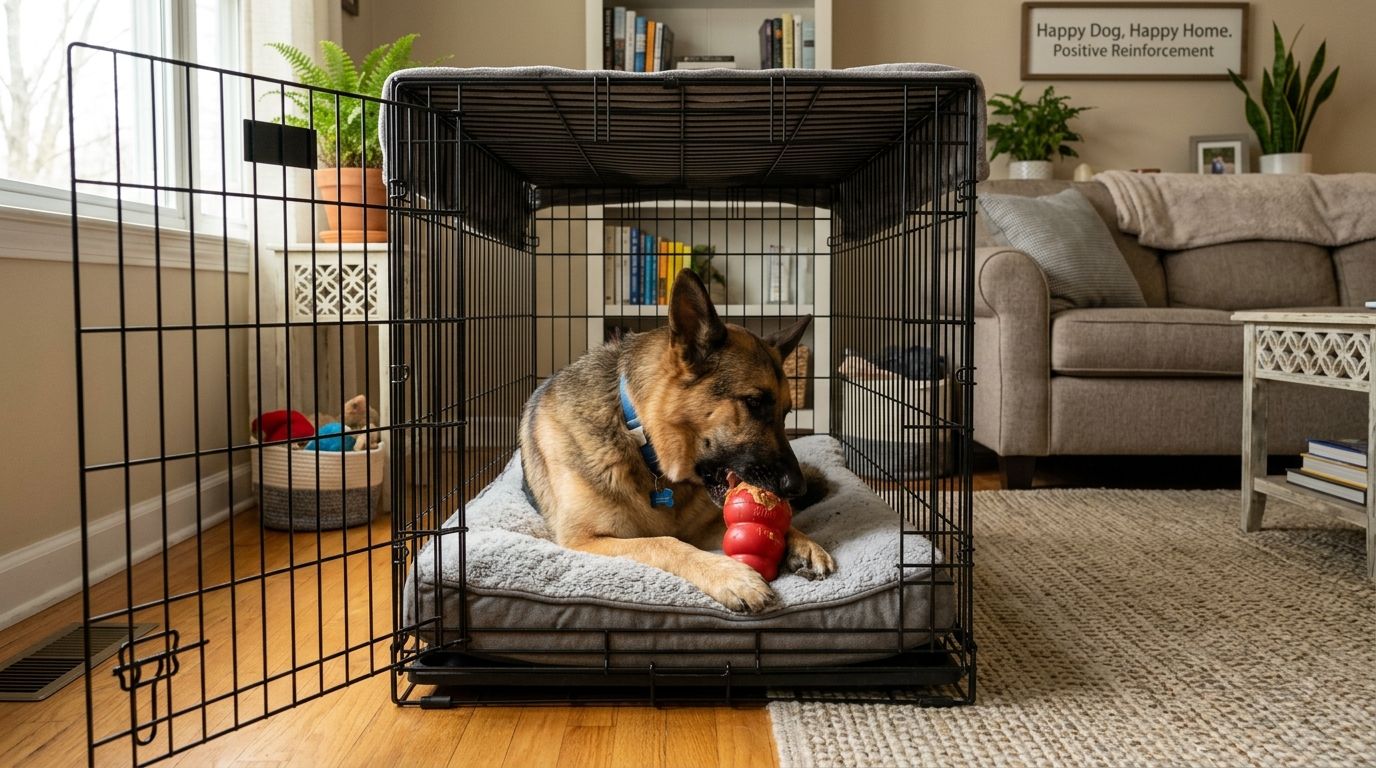
German Shepherds were bred to work side by side with humans all day long. They are not independent dogs that are content being alone for 8 hours. Every aspect of their breeding pushes them toward being with their person.
Specific risk factors for GSDs include:
- Velcro dog tendencies - They bond intensely with one person
- High intelligence - Smart dogs are more aware of patterns (keys jingling = leaving)
- History of rehoming - Adopted GSDs have higher separation anxiety rates
- Lack of early independence training - Puppies that were never crate trained are at higher risk
- Sudden schedule changes - Going from work-from-home to office can trigger it
Reality check: Separation anxiety is not your dog being dramatic or spiteful. Research from the ASPCA confirms it is a genuine panic disorder. Punishing a dog for separation anxiety behaviors makes the problem worse, not better.
9 Proven Ways to Fix German Shepherd Separation Anxiety
I am going to be honest: there is no overnight fix. Separation anxiety requires patience, consistency, and sometimes professional help. But these methods work.
1. Desensitize Departure Cues
Your GSD knows your leaving routine better than you do. Picking up keys, putting on shoes, grabbing your bag - each one triggers escalating anxiety.
Break the pattern by performing these actions randomly throughout the day without actually leaving. Pick up your keys, sit back down. Put on your coat, make coffee. Over time, these cues lose their power.
2. Practice Graduated Absences
Start leaving for 30 seconds. Then 1 minute. Then 5 minutes. Then 15. Build up extremely slowly. If your dog shows distress at any point, go back to the previous duration and stay there longer before advancing.
This is tedious. It can take weeks. But it works because you are teaching your dog that you always come back.
3. Make Departures and Returns Boring
Stop the emotional goodbyes. No long hugs, no "Mommy will be back soon, don't worry baby." Leave without fanfare. When you return, ignore your dog for the first 5 minutes until they are calm. Then greet them calmly.
Dramatic departures teach your dog that leaving is a big deal. Boring departures teach them it is routine.
4. Create a Safe Space
Some dogs do better with a designated space. This could be:
- A properly introduced crate that they associate with comfort
- A specific room with their bed, toys, and a piece of your worn clothing
- A gated area where they feel secure but not trapped
Never use confinement as punishment. The safe space must be a positive association.
5. Exercise Before You Leave
A physically and mentally tired GSD is far less anxious. A solid 30 to 45 minute walk or play session before departure makes a significant difference. Combine physical activity with mental stimulation for maximum impact.
6. Leave Background Noise
Complete silence amplifies anxiety. Leave a radio, TV, or calming music playlist running. Several studies show that classical music and reggae specifically reduce stress indicators in kenneled dogs.
7. Use Long-Lasting Enrichment
Give your dog something engaging to do while you are gone:
- A frozen KONG stuffed with food that takes 30+ minutes to finish
- A snuffle mat with hidden treats
- A lick mat smeared with peanut butter
The goal is to associate your departure with something positive rather than something scary.
8. Consider Calming Supplements
Natural options include:
- L-theanine based calming chews
- CBD oil (dog-specific formulations only)
- Adaptil diffusers (synthetic dog appeasing pheromone)
- Herbal supplements like chamomile and valerian root
These are not magic solutions, but they can take the edge off when combined with behavioral training.
9. Get Professional Help When Needed
If your dog's anxiety is severe, meaning they are injuring themselves trying to escape, refusing to eat, or howling for hours, consult a certified animal behaviorist. Severe cases sometimes require veterinary-prescribed anti-anxiety medication like fluoxetine or trazodone as a temporary support while behavioral modification takes effect.
What NOT to Do
- Never punish your dog for destruction or accidents caused by anxiety
- Never get a second dog solely to fix separation anxiety (it rarely works)
- Never force them into a crate if they associate it with panic
- Never leave an anxious dog alone for 8+ hours without building up to it gradually