Introduction
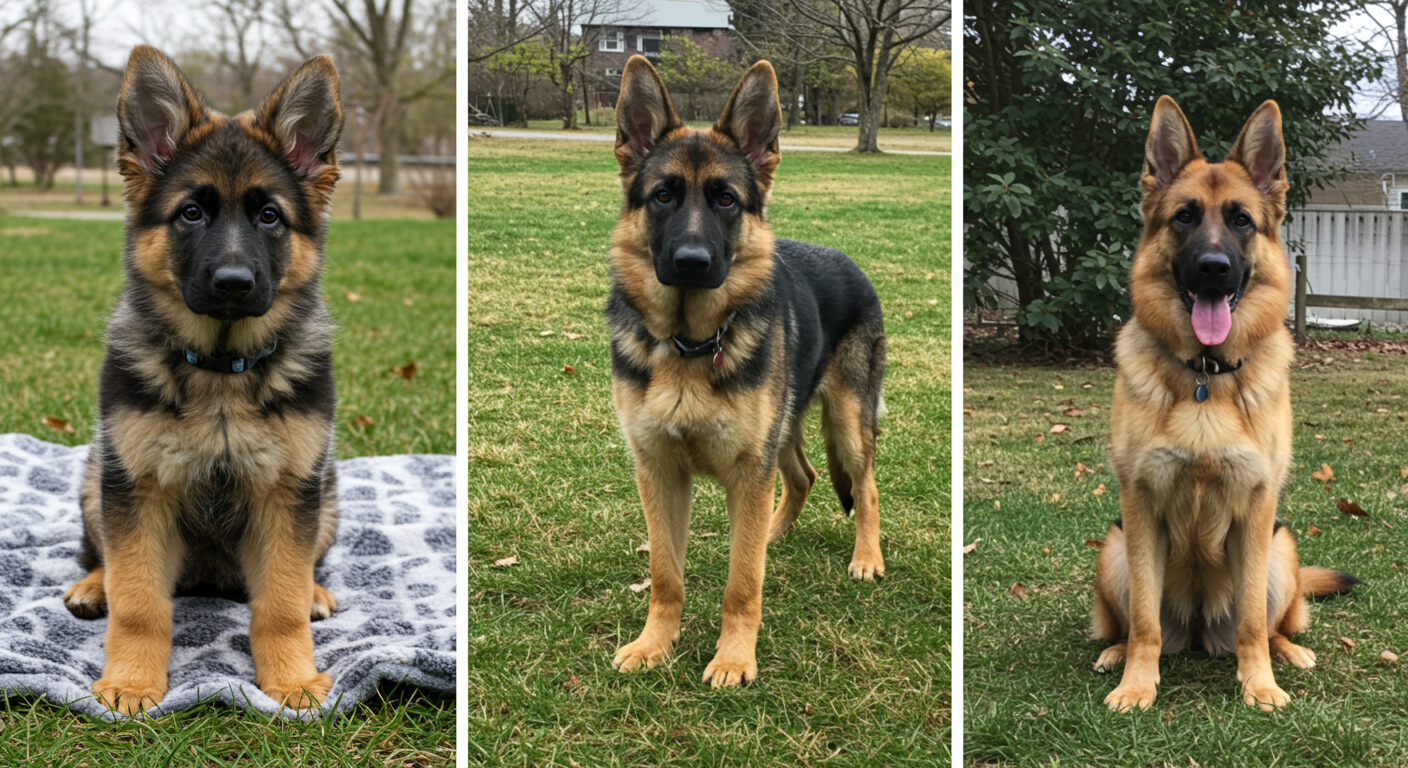
I have a photo of Koda at 8 weeks weighing 14 pounds. He's 11 months now and weighs 71 pounds. Watching a German Shepherd grow is kind of wild because it happens so fast that you don't even notice it until you try to pick them up one day and your back says no.
The question I get asked most by new GSD owners is "when do German Shepherds stop growing?" The short answer: they reach full height around 12 months, but a fully grown German Shepherd doesn't finish filling out and gaining muscle until 2 to 3 years old.
The long answer is more interesting though, and it depends on whether you have a male or female, what line they come from, and how you feed them. I'll break it all down with a detailed german shepherd growth chart based on breed standards and what I've seen with my own dogs.
German Shepherd Growth Stages
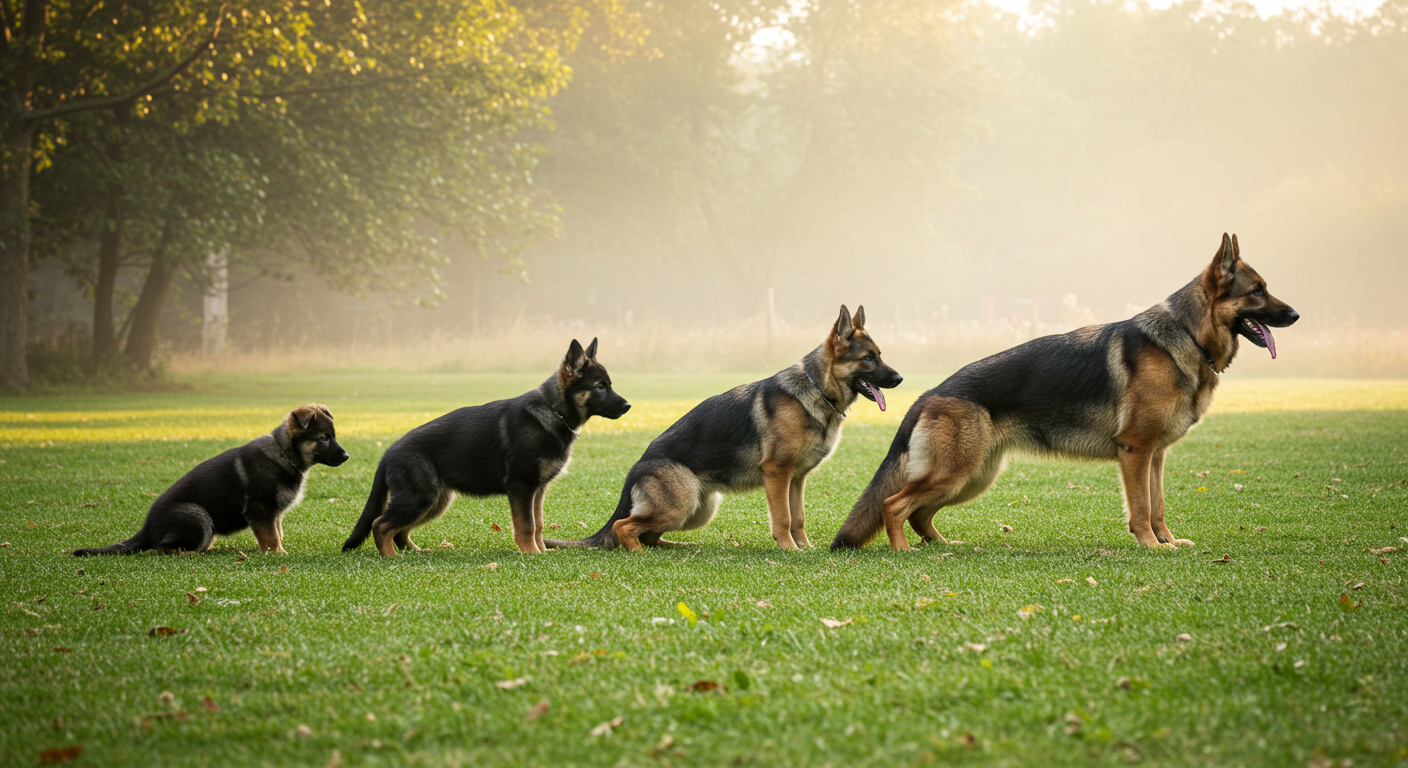
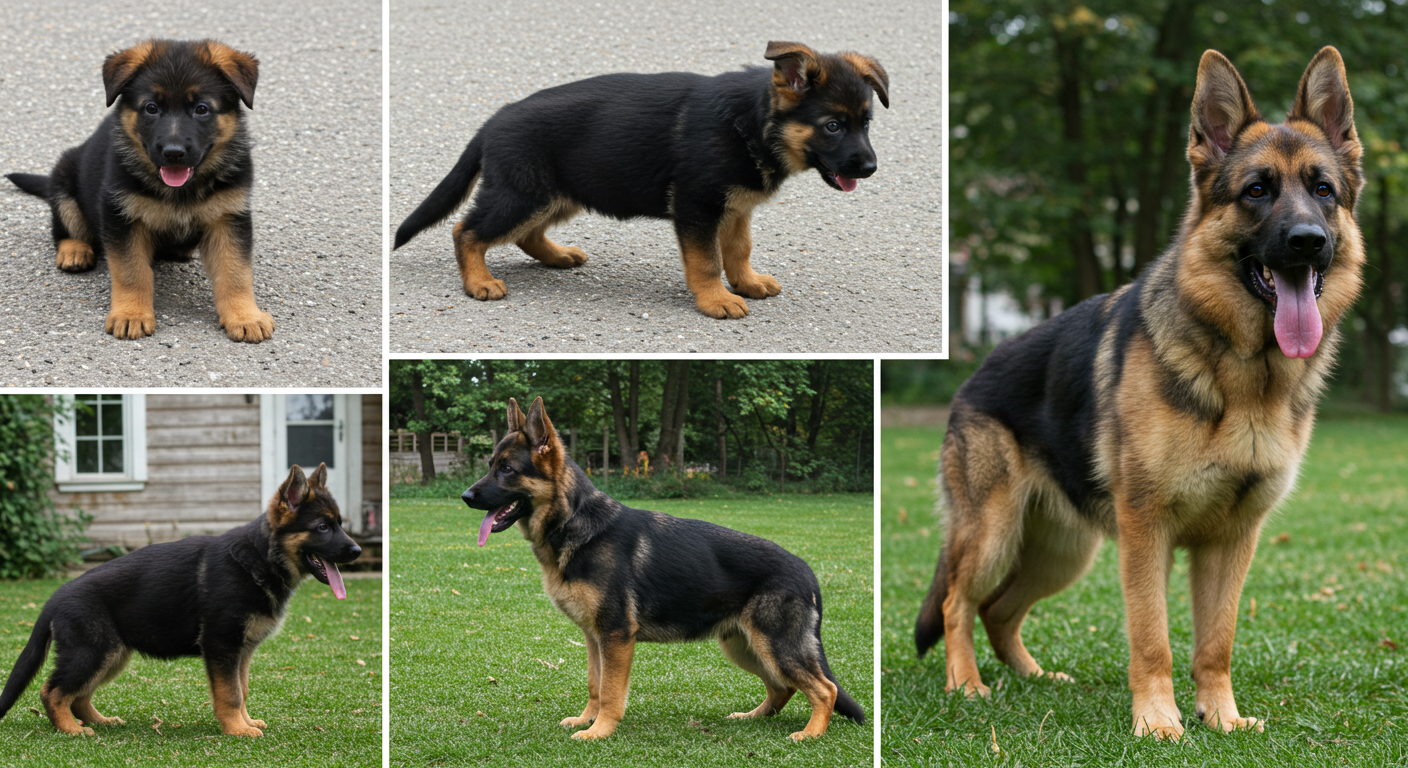
German Shepherds go through five distinct growth phases. Each one looks and feels different, both for the dog and for you.
Neonatal (Birth to 2 Weeks)
The puppy is basically a potato. Eyes closed, ears closed, can't regulate body temperature. All they do is eat, sleep, and gain weight. Koda gained about an ounce per day during this stage.
Socialization (3 to 12 Weeks)
This is where things get fun. Eyes open, ears open, and suddenly the puppy is a tiny chaos machine. They start learning bite inhibition, play behavior, and basic social skills from their littermates. Growth is rapid. Most GSD puppies double their birth weight by week 2 and triple it by week 4.
Juvenile (3 to 6 Months)
The awkward phase. Ears too big for the head. Legs too long for the body. They look like a different dog every week. Growth rate is at its peak during this stage. Koda gained almost 10 pounds per month from months 3 to 6.
Adolescent (6 to 18 Months)
Growth slows down but doesn't stop. They hit most of their adult height by 9 to 12 months, but the body keeps filling out. This is when you'll notice the difference between male and female growth patterns most clearly.
Luna (female) was basically done growing by 14 months. Rex (male) kept adding bulk until he was almost 2.5 years old.
Adult (18 Months to 3 Years)
They look full grown, and height-wise they are. But muscle development continues, especially in males. The chest broadens, the head gets bigger, and they develop that mature GSD look. Rex at 18 months looked like a teenager. Rex at 3 looked like a different dog.
Male vs Female Growth Patterns
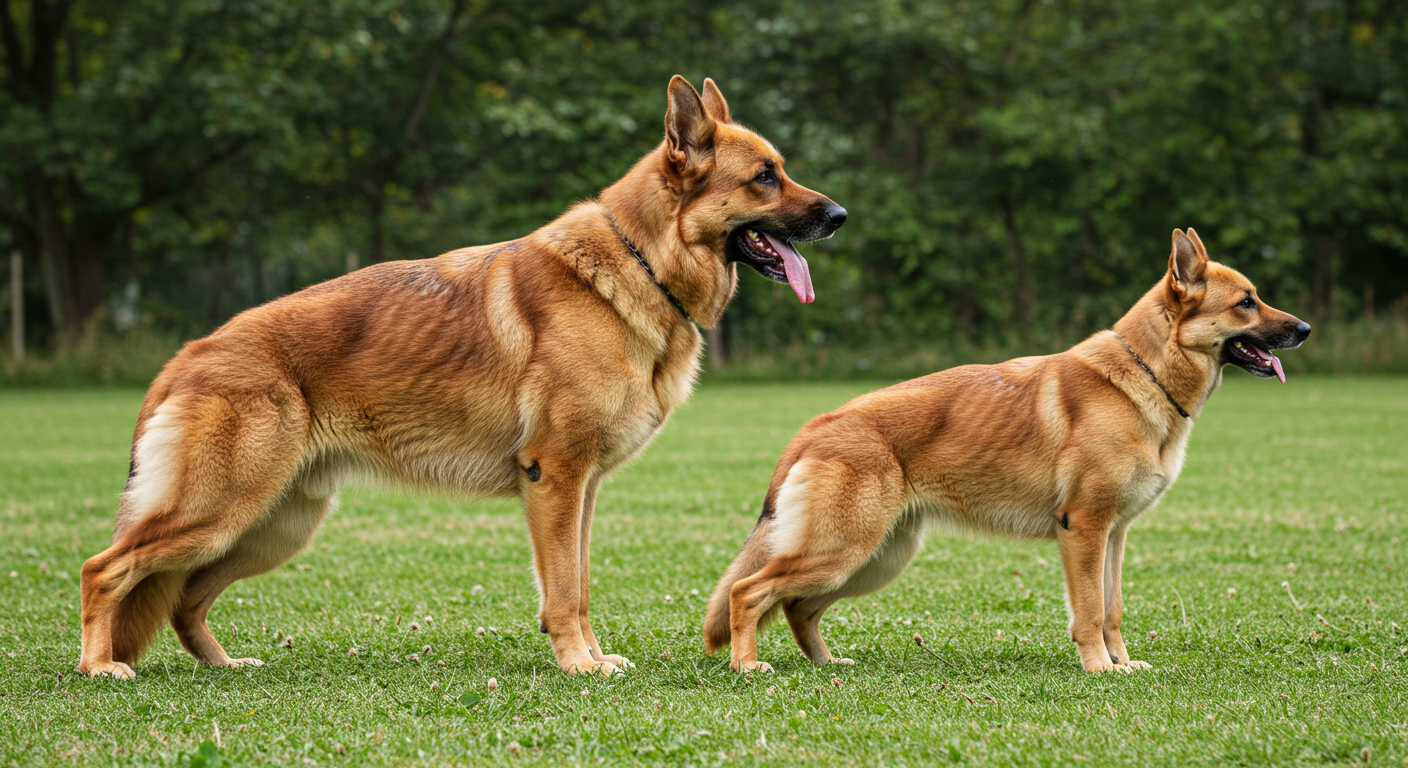
This is where I see the most confusion online. People compare their female puppy to a male growth chart and panic because she's "too small." Males and females grow at different rates and reach different final sizes.
| Trait | Male GSD | Female GSD |
|---|---|---|
| Full height reached | 12 to 18 months | 10 to 14 months |
| Full weight reached | 24 to 36 months | 18 to 24 months |
| Adult weight range | 65 to 90 lbs | 50 to 70 lbs |
| Adult height range | 24 to 26 inches | 22 to 24 inches |
Rex topped out at 85 pounds and 25.5 inches at the shoulder. Luna is 72 pounds and 23 inches. Both are healthy weights for their size. The number that matters isn't the absolute weight but whether they're proportional and maintaining a steady growth curve.
German Shepherd Weight Chart by Age
Here's the chart I reference most. These are averages based on breed standards. Your dog might be slightly above or below depending on genetics and diet.
Male GSD Weight by Age
| Age | Weight Range | What to Expect |
|---|---|---|
| 8 weeks | 12 to 18 lbs | Just brought home, tiny and clumsy |
| 3 months | 22 to 30 lbs | Growing fast, eating a lot |
| 4 months | 30 to 40 lbs | Growth spurt, might seem all legs |
| 6 months | 49 to 57 lbs | About 60% of adult weight |
| 9 months | 64 to 75 lbs | Close to full height |
| 12 months | 71 to 84 lbs | Full height, still filling out |
| 18 months | 75 to 88 lbs | Nearly full weight |
| 24 months | 77 to 90 lbs | Adult weight, muscle still developing |
Female GSD Weight by Age
| Age | Weight Range | What to Expect |
|---|---|---|
| 8 weeks | 10 to 15 lbs | Slightly smaller than males |
| 3 months | 18 to 26 lbs | Steady growth |
| 4 months | 26 to 35 lbs | Growth spurt phase |
| 6 months | 40 to 49 lbs | About 65% of adult weight |
| 9 months | 50 to 60 lbs | Approaching adult size |
| 12 months | 55 to 66 lbs | Near full height |
| 18 months | 60 to 70 lbs | Most females are done growing |
| 24 months | 60 to 70 lbs | Final adult weight |
How I track weight at home: I step on the bathroom scale alone, then pick up the dog and step on again. The difference is their weight. I've been doing this monthly with all three dogs and keeping a note in my phone. It takes 30 seconds and has caught problems early twice. Once with Rex gaining too fast as a puppy, and once with Luna losing weight at age 6 (turned out she had a tooth infection).
German Shepherd Height Chart
Height is measured from the ground to the top of the shoulder blades (the withers), not the top of the head. A lot of people get this wrong and then think their dog is shorter than average.
| Age | Male Height | Female Height |
|---|---|---|
| 3 months | 9 to 11 inches | 8 to 10 inches |
| 6 months | 16 to 18 inches | 15 to 17 inches |
| 9 months | 21 to 23 inches | 19 to 21 inches |
| 12 months | 22 to 24 inches | 20 to 22 inches |
| 18 months | 23 to 25 inches | 21 to 23 inches |
| 24 months | 24 to 26 inches | 22 to 24 inches |
Most German Shepherds reach about 90% of their adult height by 9 months. After that, growth shifts from vertical (getting taller) to horizontal (filling out, building chest and muscle).
Koda hit 24 inches at 9 months and hasn't grown taller since. He's gained about 8 pounds since then though, all muscle and chest width.
When Do German Shepherds Actually Stop Growing?
Short answer, broken down simply:
Height: Done by 12 months for most dogs. Some males add another inch between 12 and 18 months, but that's it.
Weight and muscle: Continues until 18 to 24 months for females and 24 to 36 months for males. Rex added almost 10 pounds of muscle between his first birthday and his second.
Head and chest: The last things to develop. You'll notice the head getting wider and the chest deepening well into year 2. This is why a 12-month-old GSD looks "lanky" compared to a 3-year-old. They're the same height, but the older dog has filled out.
Factors That Affect When They Stop Growing
Genetics is the biggest one. Working line GSDs tend to be leaner and slightly smaller than show line dogs. If you know your dog's parents, look at them for the best prediction of adult size.
Nutrition matters more than people think. Overfeeding a puppy doesn't make them bigger. It makes them grow too fast, which puts stress on developing joints and increases hip dysplasia risk. I learned this the hard way with Rex. Underfed puppies can also end up smaller than their genetic potential.
Spay/neuter timing affects growth plates. Dogs fixed before 12 months often grow slightly taller (growth plates stay open longer) but may have weaker joint structure. Discuss timing with your vet. We waited until 18 months for Luna.
Exercise should be moderate during the first year. No long runs on hard surfaces until growth plates close. Walks and play are fine. Repetitive high-impact exercise (like jogging on pavement) is not. Swimming is great if your dog tolerates it.
How to Support Healthy Growth
Here's what I do differently now compared to when I raised Rex (and the mistakes I won't repeat):
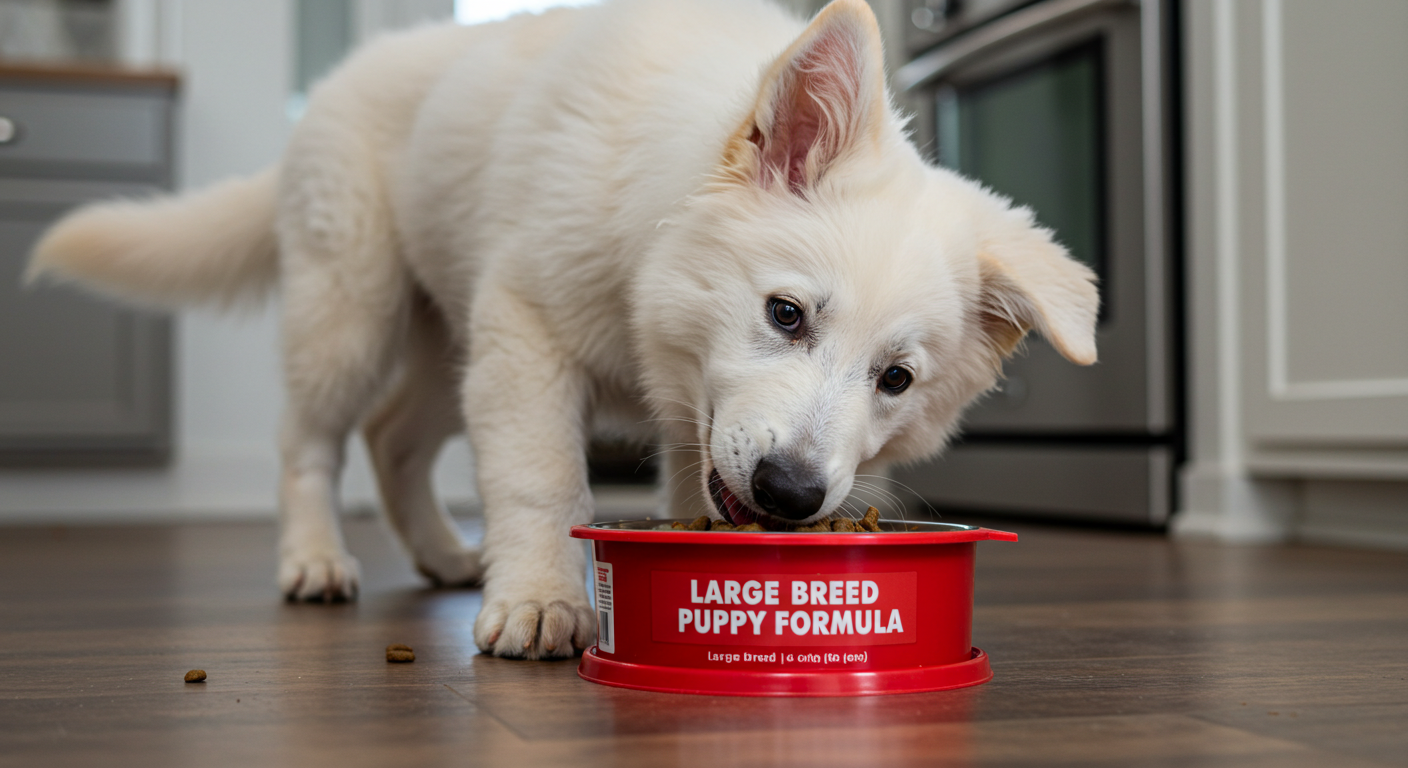
Feed a large breed puppy food. Regular puppy food has too much calcium for a GSD's growing bones. Large breed formulas have controlled calcium and phosphorus levels to support steady growth without pushing it too fast. I use Orijen Large Breed Puppy for Koda.
Don't overfeed. Slow, steady growth is better than fast growth. A slightly lean puppy is healthier than a chunky one. Use the feeding chart and adjust based on your dog's body condition.
Weigh monthly and track. Even a cheap bathroom scale works. You're looking for a smooth, upward curve. Sudden spikes or drops need a vet visit.
Limit high-impact exercise before 12 months. Short walks, free play in the yard, puppy training sessions. Save the long hikes and runs for after the growth plates close.
Add a joint supplement early. Our vet recommended starting glucosamine at 6 months. We use Nutramax Cosequin. Seems early, but GSDs are prone to joint issues and prevention beats treatment every time.
Get regular vet checkups. At minimum every 6 months during the first year. Your vet can check growth rate, joint development, and catch problems you might miss at home.
Understanding when German Shepherds stop growing helps you plan feeding transitions, exercise intensity, and joint care correctly.