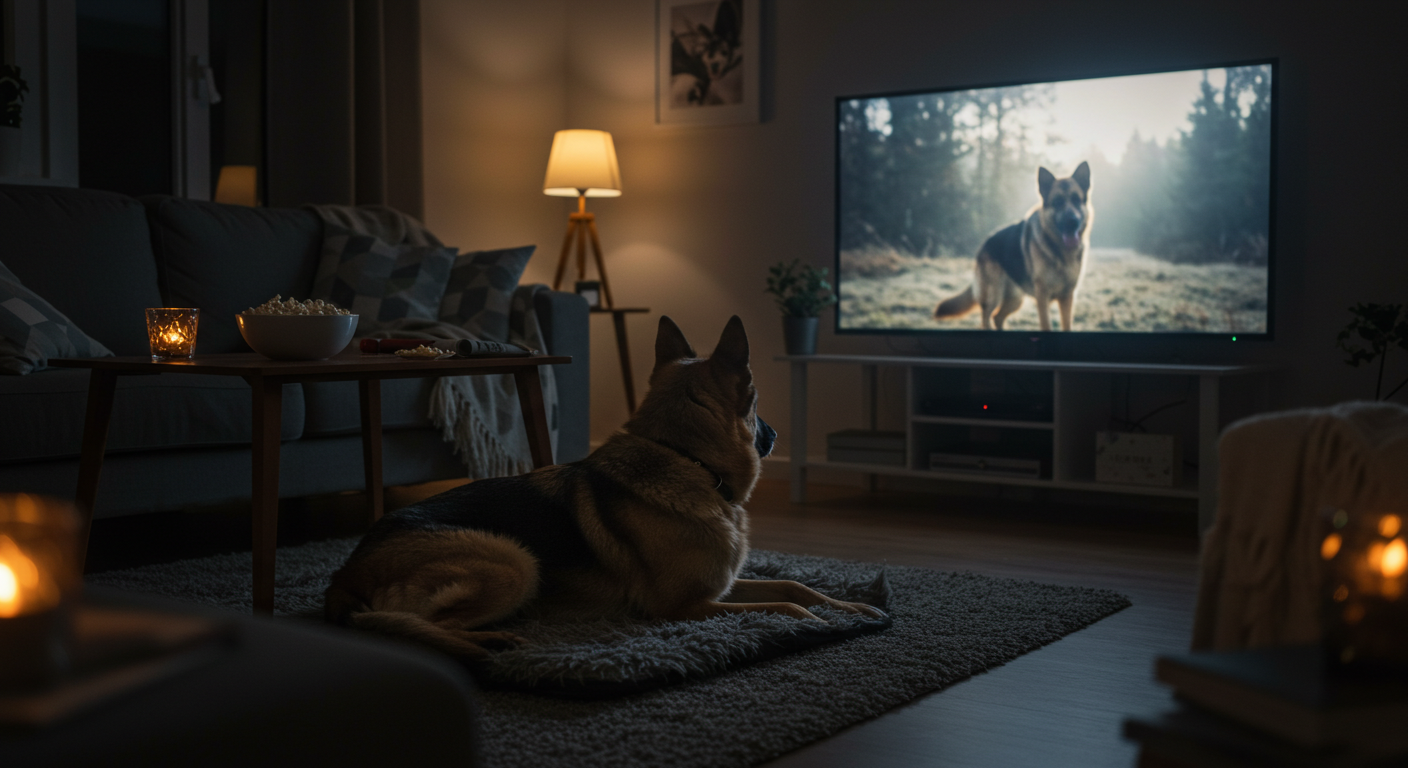
You're sitting on the couch watching TV when your German Shepherd slowly lowers themselves to the floor and lets out a long, guttural groan that sounds like a 90-year-old man settling into a recliner. You glance over. They stare back at you. Another groan.
If this sounds familiar, you're not alone. German Shepherds are one of the most vocal dog breeds on the planet, and groaning is one of their signature sounds.
But why do German Shepherds groan? Should you be concerned, or is it just your GSD being their usual expressive self?
1. Contentment and Relaxation
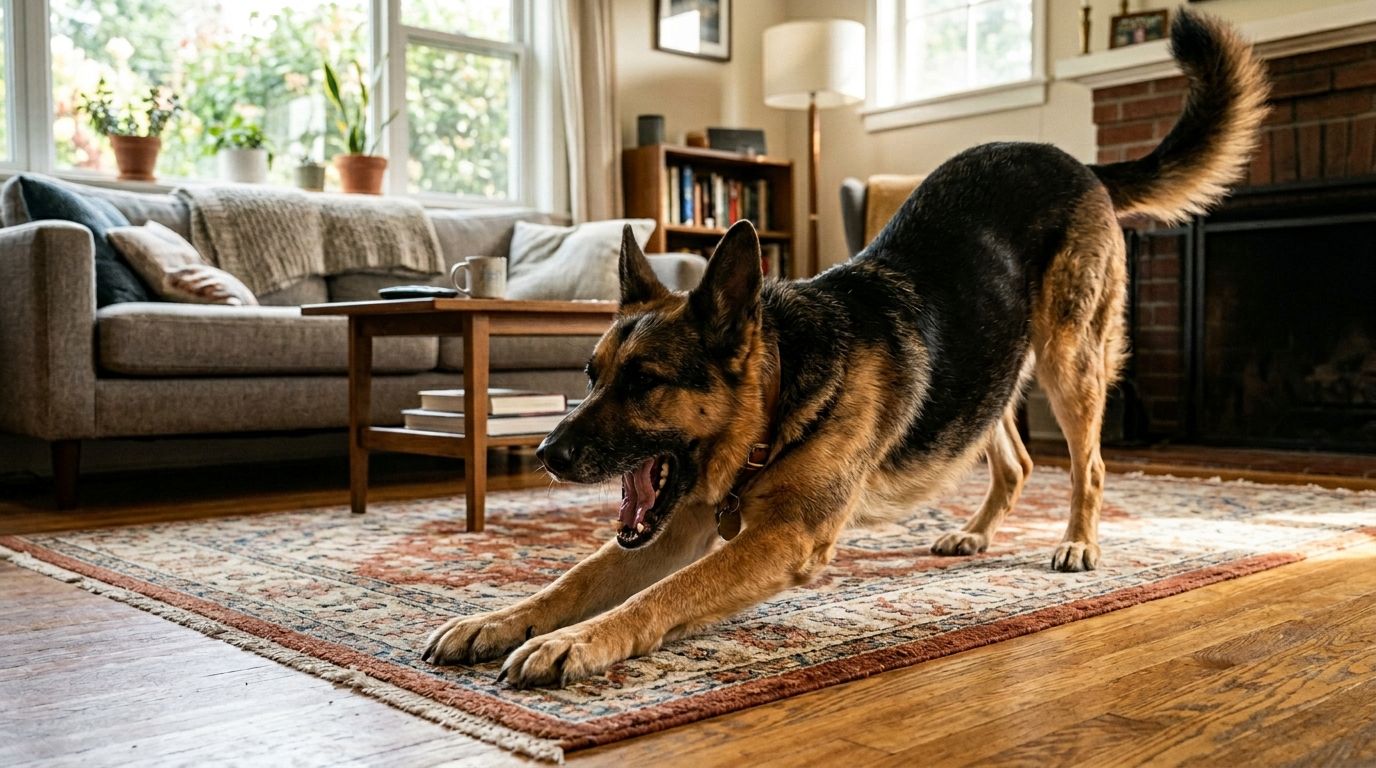
The most common reason your German Shepherd groans is simple: they're comfortable.
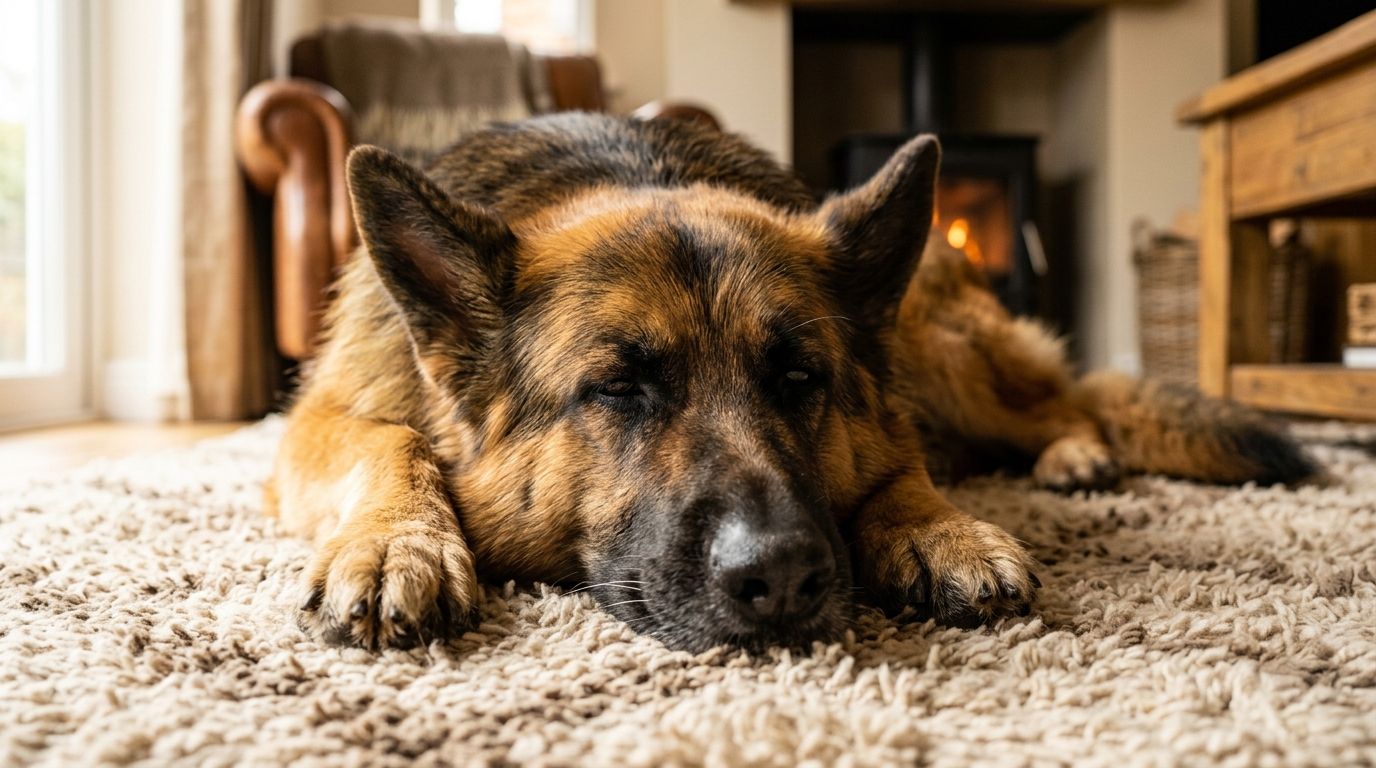
Just like you might let out a satisfied sigh after a long day, your GSD groans when they've found the perfect spot on the couch, finished a great meal, or are settling in for a nap. This is the canine equivalent of saying, "Ahhh, this is nice."
How to tell it's a contentment groan:
- It happens when they're lying down
- Their body is relaxed, not tense
- Their eyes might be half-closed
- It's a single, slow groan - not repeated
This is absolutely nothing to worry about. Your dog is simply expressing happiness.
2. Seeking Your Attention
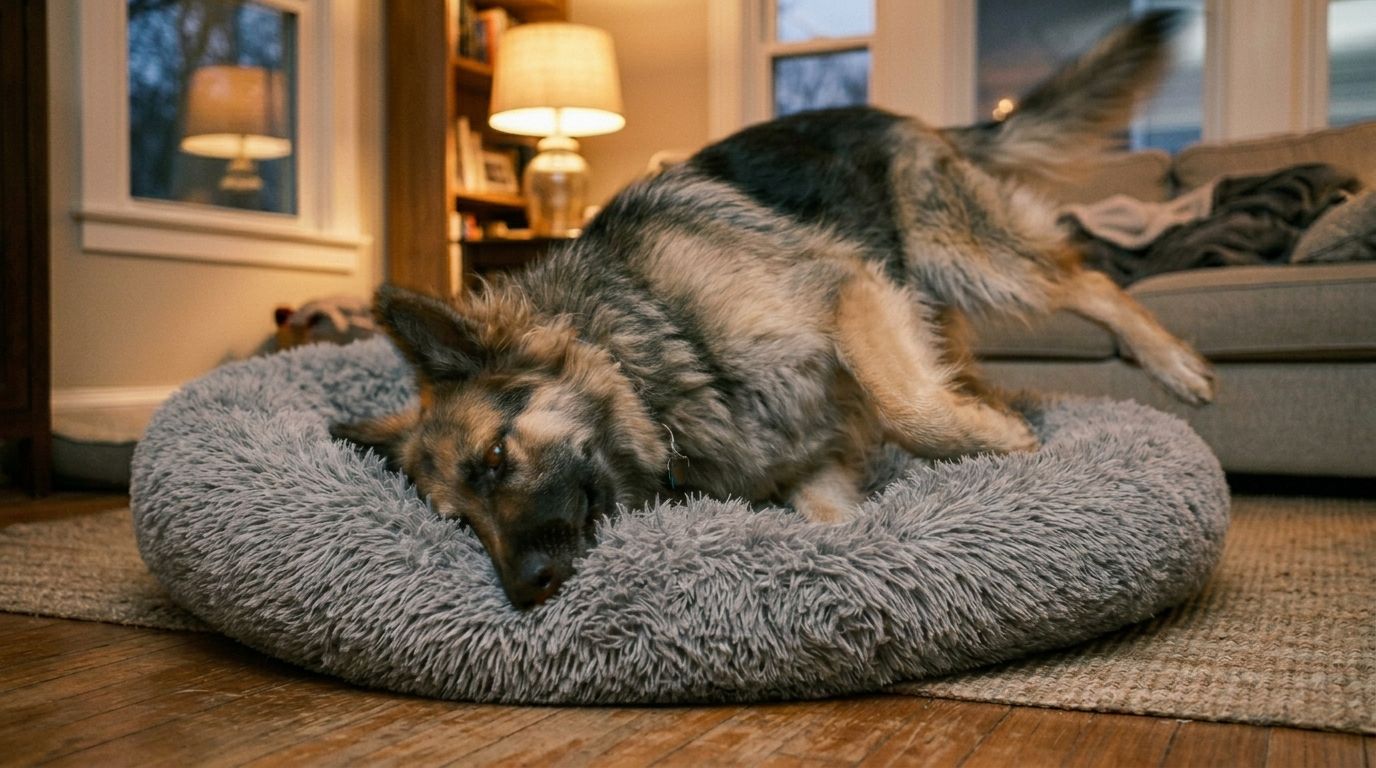
German Shepherds are master communicators, and they quickly learn that groaning gets a response from their owners. If your GSD groans and you immediately look at them, talk to them, or pet them - congratulations, you've been trained.
Attention-seeking groans typically:
- Happen when you're busy or distracted
- Get louder or more frequent if ignored
- Are accompanied by direct eye contact
- Stop immediately once they have your attention
This isn't a bad thing - it's actually a sign of a strong bond. Your GSD values your attention so much that they've developed a specific vocalization to get it.
3. They're Stretching or Settling In
Dogs, like humans, sometimes vocalize when they stretch. If your German Shepherd groans while stretching out their legs or circling before lying down, it's purely a physical response to the movement.
This is especially common in:
- Older German Shepherds whose joints are stiffer
- GSDs who have had an intense exercise session
- Dogs settling into a new position after lying still for a while
Think of it like the sound you make when you stretch after sitting at a desk for too long. It's involuntary and perfectly normal.
4. Expressing Frustration or Disapproval
German Shepherds have opinions. Strong ones. And they're not shy about sharing them.
If your GSD wants something - a walk, a treat, your spot on the bed - and they're not getting it, they might groan to express their displeasure. This is different from a whine, which is higher-pitched and more urgent. A frustration groan is low, rumbling, and sounds almost like they're muttering under their breath.
Common scenarios that trigger frustration groans:
- Being told to get off the furniture
- Watching you eat without sharing
- Seeing you pick up keys but not the leash
- Being left out of an activity
If you've ever felt like your German Shepherd is genuinely arguing with you, you're probably not wrong.
5. Why Do German Shepherds Groan From Pain or Discomfort?
While most groaning is harmless, it can occasionally indicate pain or discomfort. This is especially important to watch for in older German Shepherds or those with known health conditions.
Warning signs that groaning might indicate pain:
- Groaning when getting up or lying down (more than usual)
- Groaning when a specific body part is touched
- Groaning accompanied by limping or stiffness
- New or sudden increase in groaning frequency
- Groaning paired with loss of appetite or lethargy
German Shepherds are particularly prone to:
- <a href="https://www.akc.org/expert-advice/health/hip-dysplasia-in-dogs/">Hip dysplasia</a> - groaning when rising from rest
- Elbow dysplasia - groaning when bearing weight on front legs
- Arthritis - general groaning during movement in senior GSDs
- <a href="https://www.shepherdtips.com/posts/bloat-in-dogs">Bloat (GDV)</a> - groaning with restlessness and a swollen abdomen (emergency)
If you're not sure what to watch for, our complete guide to GSD health problems covers every condition this breed is predisposed to.
When to see a vet: If your German Shepherd's groaning has suddenly increased, is paired with other symptoms, or happens specifically during movement, schedule a veterinary checkup. Better safe than sorry with this breed.
6. Dreaming
Yes, dogs dream. And German Shepherds are particularly active dreamers.
During REM sleep, your GSD might groan, whimper, twitch, move their paws, or even bark softly. This is completely normal and happens because their brain is processing the day's events.
Dream groans are easy to identify:
- They only happen during sleep
- They're often accompanied by leg twitching
- Your dog's eyes may move rapidly under closed lids
- They stop when the dog wakes up
There's no need to wake your GSD when they're dream-groaning. Let them sleep - they're probably chasing squirrels in their dreams. If you're curious about what happens inside your dog's head at night, check out what dogs dream about during sleep.
7. Age-Related Vocalization
As German Shepherds age, they tend to become more vocal overall. Senior GSDs (8+ years) often groan more frequently for several reasons:
- Joint stiffness makes movement uncomfortable
- Cognitive changes can increase vocalization
- Decreased hearing means they can't hear themselves as well
- Habit - years of groaning being reinforced by owner attention
If your senior German Shepherd is groaning more than they used to, it's worth a veterinary checkup to rule out pain-related causes. A quality hip and joint supplement can also make a big difference in their comfort level. But often, increased groaning is simply a natural part of aging for this vocal breed.
8. Breed-Specific Expressiveness
Here's the simplest explanation: German Shepherds groan because they're German Shepherds.
This breed is one of the most vocally expressive in the canine world. They don't just bark - they groan, sigh, whine, grumble, howl, and "talk." It's part of their heritage as working dogs who needed to communicate constantly with their handlers.
Comparing GSD vocalizations to other breeds:
- Labrador Retriever - mostly quiet with occasional barks
- Husky - famous for howling and "talking"
- German Shepherd - the full spectrum: groans, sighs, whines, grumbles, and full conversations
If you wanted a quiet dog, you probably wouldn't have gotten a German Shepherd. And if you did, you've learned the truth by now.
Should You Stop Your German Shepherd From Groaning?
In most cases, no. Groaning is a natural, healthy form of expression for this breed. Trying to suppress it would be like asking a Husky not to howl - technically possible, but fighting against their nature.
However, if the groaning is:
- Excessive and disruptive - redirect with training, not punishment
- Pain-related - address the underlying medical cause
- Attention-seeking and problematic - avoid reinforcing it by only giving attention during quiet moments