Introduction
A friend in our GSD group lost her 5-year-old German Shepherd to bloat. From first symptoms to death was less than 4 hours. She didn't know the signs, thought her dog just had a stomachache, and by the time she got to the emergency vet, it was too late.
That's what makes bloat in dogs so dangerous. It kills fast, symptoms can look like "just a stomachache" at first, and German Shepherds are one of the highest-risk breeds.
After hearing her story, I learned everything I could about bloat prevention and recognition. Our vet walked me through it in detail. This is probably the most important article on this entire site.
What Bloat Actually Is
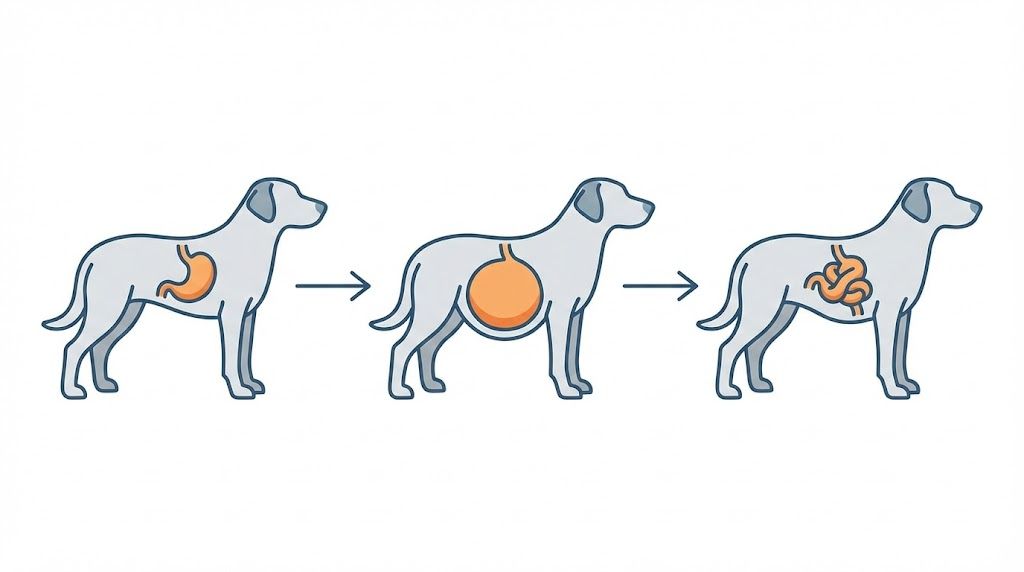
The medical term is gastric dilatation-volvulus (GDV). It happens in two stages:
Stage 1 - Gastric Dilatation: The stomach fills with gas and fluid and expands. This alone is uncomfortable but survivable.
Stage 2 - Volvulus: The bloated stomach twists on itself (rotates 180 to 360 degrees). This cuts off blood flow to the stomach and spleen, traps gas inside, and compresses major veins that return blood to the heart.
Once the stomach twists, the dog can go into shock and die within 1 to 2 hours without emergency surgery.
Mortality rate: Even with treatment, bloat kills 25 to 30% of dogs. Without treatment, it's nearly 100% fatal.
Recognizing the Signs
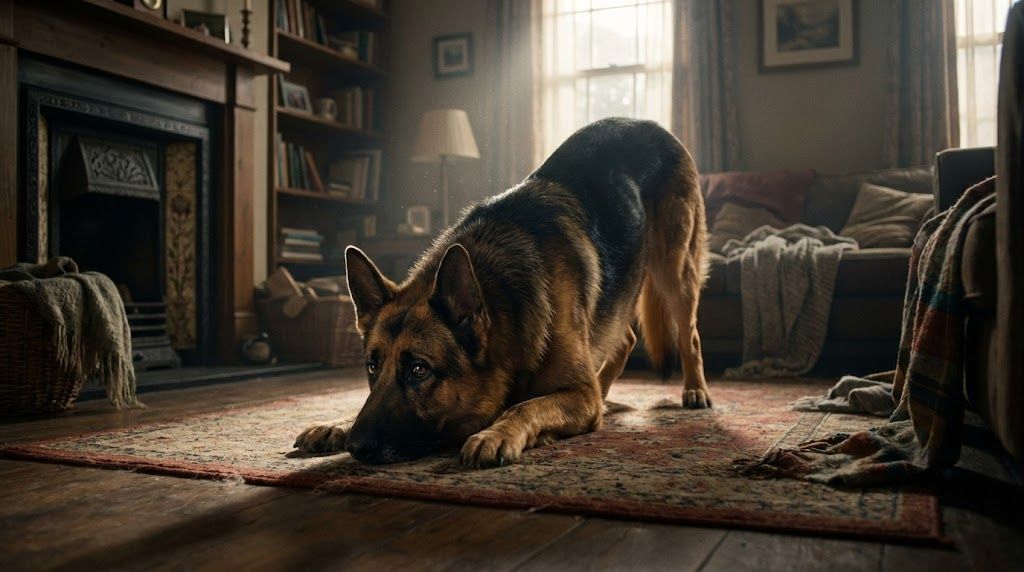
This is the part that saves lives. Learn these and you could have an extra 1 to 2 hours to get to an emergency vet:
| Sign | What It Looks Like |
|---|---|
| Swollen abdomen | Belly looks distended, feels tight like a drum |
| Non-productive retching | Trying to vomit but nothing comes up. This is the hallmark sign. |
| Restlessness | Can't get comfortable, pacing, standing up and lying down repeatedly |
| Drooling | Excessive salivation |
| Rapid breathing | Panting heavily without physical exertion |
| Collapse | Weakness in hind legs, unable to stand. This means shock is starting. |
The critical one is dry heaving with a swollen belly. If your dog is trying to throw up and can't, and their stomach looks bigger than normal, get to an emergency vet immediately. Do not wait. Do not "see if it gets better." Call ahead while driving so they're ready for you.
Why German Shepherds Are at High Risk
Bloat is most common in large, deep-chested breeds. The GSD body shape creates a chest cavity where the stomach has room to move and twist.
Risk factors for German Shepherds:
- Large breed with deep chest (anatomical risk)
- Eating one large meal per day instead of smaller, spaced meals
- Eating rapidly (gulping air with food)
- Exercise right before or after eating
- Stress or anxiety (anxious dogs swallow more air)
- Family history (genetic component)
- Age (risk increases with age, peaks around 7 to 9 years)
Prevention
You can't eliminate the risk completely, but you can reduce it significantly:
Feed 2 to 3 smaller meals instead of one big meal. I feed all three dogs twice daily. Our vet specifically told me never to feed a German Shepherd once a day because of bloat risk. Feeding chart here.
No exercise 1 hour before or after meals. We eat, rest for an hour, then walk. Not the other way around. This is non-negotiable in our house.
Use a slow feeder or lick mat. Rex used to gulp his food in under a minute. A slow feeder bowl extended it to 8 to 10 minutes.
Keep the food bowl on the floor. Raised bowls were once recommended but studies now suggest they may increase bloat risk.
Avoid high-fat meals right before or after exercise.
Discuss preventive gastropexy with your vet. This is a surgical procedure (can be done during spay/neuter) that tacks the stomach to the body wall so it can't twist. It doesn't prevent bloating, but it prevents the deadly twist. Many GSD breeders now recommend it.
What to Do If You Suspect Bloat
- Do not wait. Time is everything. Minutes matter.
- Call the nearest emergency vet. Not your regular vet unless they do emergency surgery. Tell them you suspect GDV so they can prepare.
- Drive immediately. Don't try home remedies. Don't google more. Get in the car.
- Keep your dog calm and still. No jumping in and out of cars if possible. Carry if you can.
Emergency surgery for GDV costs $3,000 to $7,000. That's the financial reality. Pet insurance that covers emergencies is worth considering for any German Shepherd owner.
Prevention is the most important thing you can learn about bloat in dogs because treatment doesn't always succeed even with emergency surgery.