My German Shepherd got her first lepto vaccine at 14 weeks. I didn't think much about it at the time. My vet added it to her standard puppy shot rotation, I paid the bill, and we went home. Two days later, she was lethargic, had a swollen face, and refused her dinner.
That experience taught me something I wish I'd known earlier: the lepto vaccine for dogs is one of the most debated shots in canine medicine, and every owner should understand what it does, who actually needs it, and what the risks look like before saying yes.
What Is Leptospirosis?
Leptospirosis is a bacterial infection caused by the Leptospira spirochete. Dogs pick it up through contact with infected urine, contaminated water, or soil. The bacteria enter through cuts in the skin, through mucous membranes, or by drinking standing water where infected wildlife (rats, raccoons, deer, squirrels) has urinated.
Here's what makes leptospirosis scary: it attacks the kidneys and liver. Left untreated, it causes organ failure and death. And it's zoonotic, meaning your dog can pass it to you and your family.
According to the AVMA, leptospirosis cases have been rising across the U.S., partly due to urban wildlife carrying the bacteria into suburban neighborhoods and dog parks.
Who Needs the Lepto Vaccine?
This is where things get complicated. Unlike the core vaccines (rabies, distemper, parvo, adenovirus), the lepto vaccine is classified as a non-core vaccine. That means it's recommended based on lifestyle and risk, not given to every dog automatically.
Your German Shepherd is a strong candidate for the lepto vaccine if:
- You live near wooded areas, farms, or standing water
- Your dog swims in lakes, ponds, or rivers
- You have rodent activity on your property
- Your dog has access to shared outdoor spaces where wildlife is active
- You live in a region with documented lepto cases (most of the eastern U.S., Pacific Northwest, and increasingly the Midwest)
Your dog may not need it if:
- They spend almost all of their time indoors
- They have no exposure to wildlife habitats or standing water
- Your vet confirms low regional risk
Warning: German Shepherds who love swimming in natural water are at higher risk for leptospirosis. The bacteria thrive in slow-moving or stagnant water, especially after rain.
Lepto Vaccine for Dogs: Schedule & Timing
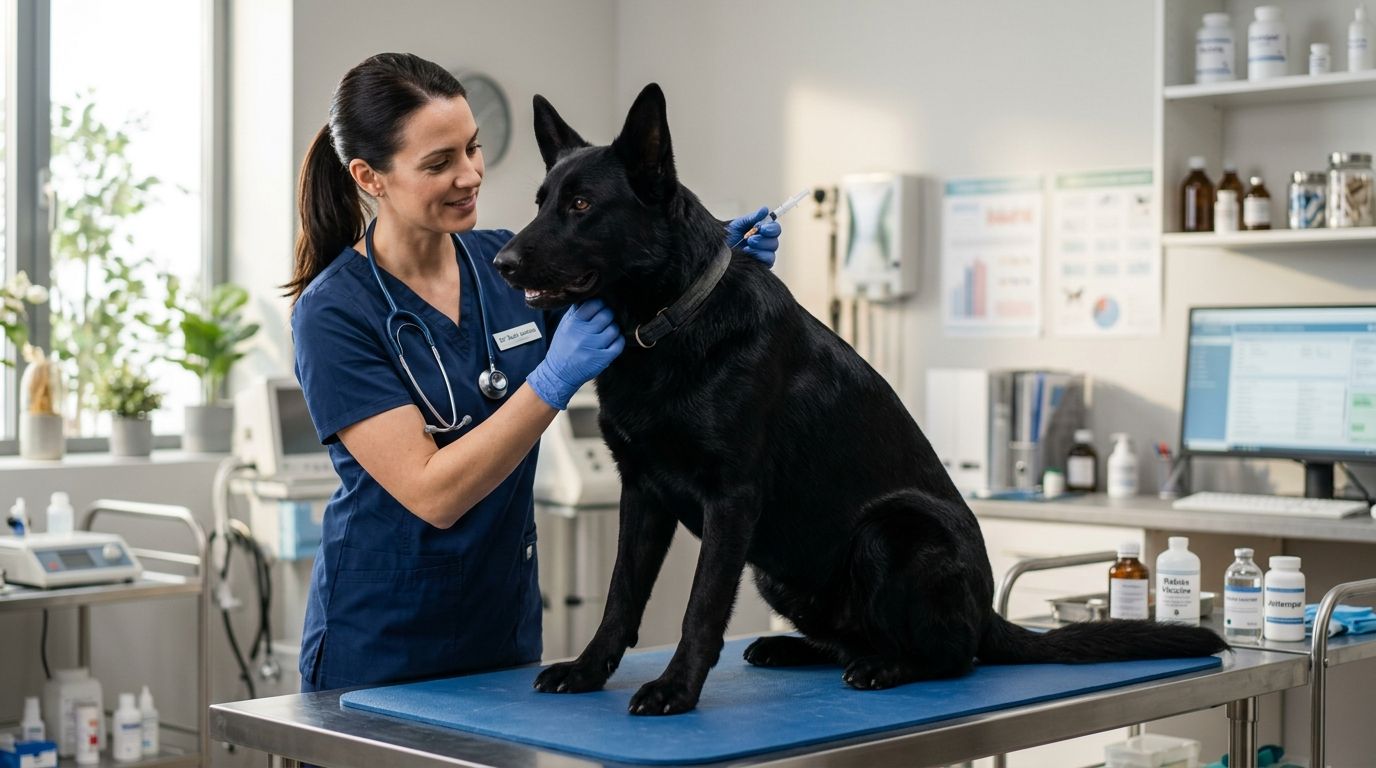
The standard protocol for the lepto vaccine involves an initial series followed by annual boosters. Here's how it breaks down:
| Dose | Timing | Notes |
|---|---|---|
| First dose | 12 weeks of age (earliest) | Some vets prefer waiting until 16 weeks |
| Second dose | 2-4 weeks after first dose | Both doses required for full protection |
| Annual booster | Every 12 months | Protection wanes faster than core vaccines |
Unlike rabies or DHPP from the puppy vaccine schedule, the lepto vaccine doesn't provide long-lasting immunity. That annual booster isn't optional. Skip it, and your dog loses protection.
Lepto Vaccine Side Effects: What I Learned the Hard Way
Every vaccine carries some risk of side effects. But the lepto vaccine has a higher reaction rate than most core vaccines, especially in smaller breeds. German Shepherds handle it better than toy breeds, but reactions still happen.
Common side effects (mild, resolve in 24-48 hours):
- Lethargy and reduced appetite
- Mild swelling at the injection site
- Low-grade fever
- Muscle soreness or stiffness
Uncommon but serious side effects:
- Facial swelling or hives (allergic reaction)
- Vomiting or diarrhea
- Difficulty breathing
- Anaphylaxis (rare but requires immediate emergency care)
My GSD's facial swelling after her first lepto shot was an allergic reaction. My vet prescribed an antihistamine and monitored her for 6 hours. She recovered fully, and we discussed whether the booster was worth the risk given our lifestyle (we live near a creek, so yes, it was).
Pro Tip: Ask your vet to administer the lepto vaccine on a separate visit from other shots. Giving multiple vaccines at once increases the overall reaction risk. Spacing them out by 2-3 weeks gives your dog's immune system a chance to respond without being overwhelmed. This is especially relevant if your dog has a history of throwing up or feeling off after vet visits.
The 4-Serovar vs. 2-Serovar Debate
Not all lepto vaccines are the same. Older versions covered only 2 serovars (strains) of Leptospira. Modern vaccines cover 4 serovars:
| Vaccine Type | Serovars Covered | Protection Level |
|---|---|---|
| 2-serovar (L2) | *Canicola*, *Icterohaemorrhagiae* | Partial, misses common strains |
| 4-serovar (L4) | *Canicola*, *Icterohaemorrhagiae*, *Grippotyphosa*, *Pomona* | Broader coverage |
Most veterinarians now use the 4-serovar version. The added coverage matters because Grippotyphosa and Pomona are the strains most commonly transmitted by wildlife, making them very relevant for German Shepherd owners whose dogs spend time outdoors.
Symptoms of Leptospirosis in Dogs
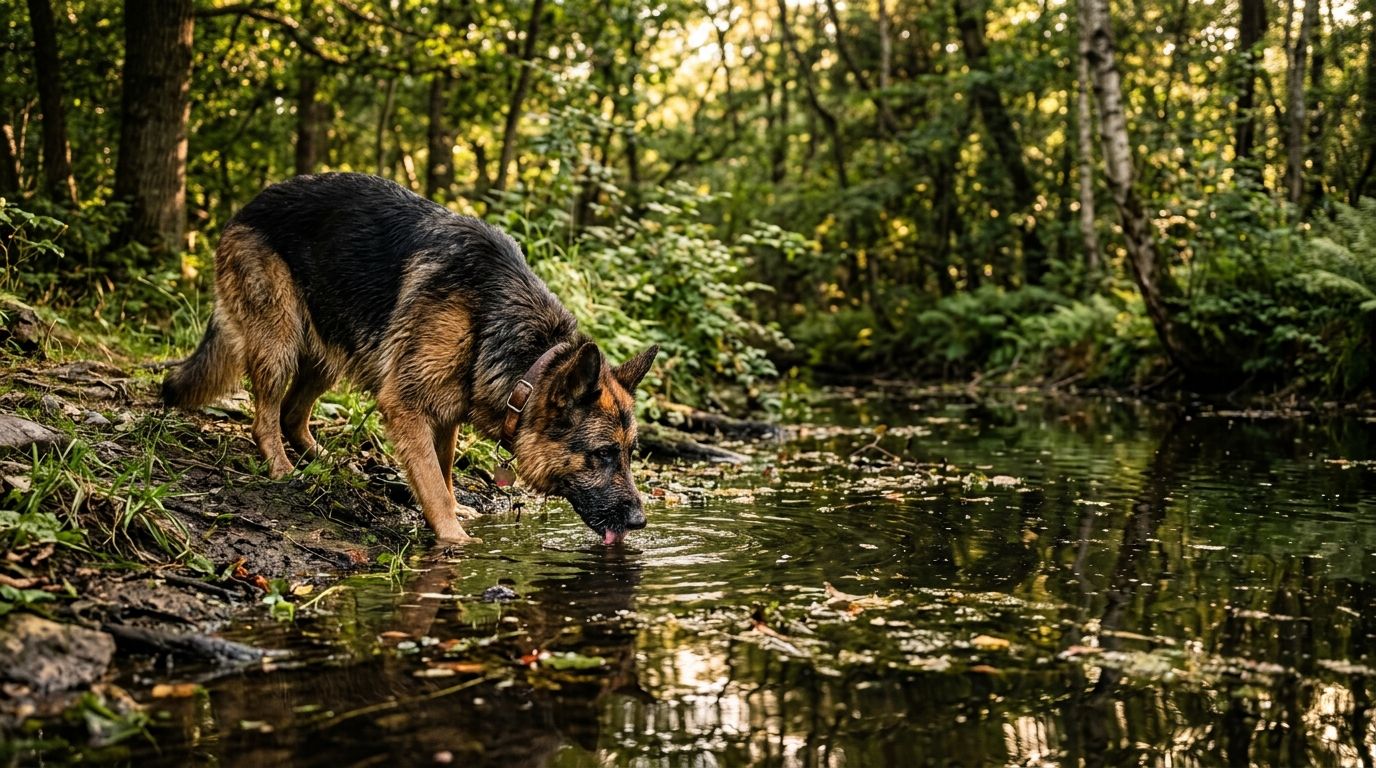
Knowing what leptospirosis looks like can save your dog's life. Early treatment dramatically improves outcomes, but the symptoms mimic other conditions, which makes fast action critical.
Early signs (first 4-7 days):
- Fever and shivering
- Muscle pain and reluctance to move
- Loss of appetite
- Increased thirst and urination
- Vomiting and diarrhea
Advanced signs (kidney/liver involvement):
- Yellowing of the eyes, gums, or skin (jaundice)
- Dark or bloody urine
- Decreased urination (kidney failure)
- Lethargy and collapse
- Bloody stool in severe cases
If your German Shepherd shows any combination of fever, vomiting, dark urine, and lethargy, call your vet immediately. Don't wait to see if it passes. Leptospirosis can go from treatable to fatal within days.
Cost of the Lepto Vaccine
The lepto vaccine is relatively affordable compared to the damage the disease itself can cause.
| Item | Typical Cost |
|---|---|
| Lepto vaccine (per dose) | $15 - $35 |
| Initial series (2 doses) | $30 - $70 |
| Annual booster | $15 - $35 |
| Leptospirosis treatment (if infected) | $1,500 - $5,000+ |
| Hospitalization for organ failure | $5,000 - $10,000+ |
When you compare a $35 annual shot to a potential $5,000+ emergency bill, the math is straightforward. Leptospirosis treatment requires IV antibiotics, fluid therapy, and sometimes dialysis. Even with aggressive treatment, not every dog survives.
My Recommendation After 12 Years
I vaccinate my German Shepherds for lepto every year. I didn't always. After researching the disease, talking to multiple vets, and nearly losing a friend's dog to leptospirosis at a local dog park, I changed my mind.
The reaction risk is real, and I take precautions: I schedule the lepto shot separately, I stay at the vet's office for 30 minutes afterward to watch for immediate reactions, and I monitor closely for 48 hours. But the protection it provides, especially for an active, outdoor GSD, outweighs the small risk of a vaccine reaction.
If you're on the fence, have an honest conversation with your vet about your specific dog's lifestyle and regional risk. There's no universal answer, only the answer that's right for your dog.