Your German Shepherd is bouncing off the walls. Again. They've already had a walk, eaten breakfast, destroyed a chew toy, and it's only 9 AM. You're exhausted. They're just getting started.
If you're wondering, "Why is my German Shepherd so hyper?" - you're asking one of the most common questions GSD owners have. And the answer isn't as simple as "they need more exercise."
Let's break down exactly why your GSD has seemingly unlimited energy and, more importantly, what you can actually do about it.
Quick Answer: When Do German Shepherds Calm Down?
Most German Shepherds begin to settle between 2 and 3 years old, with full maturity coming around age 3 to 4. However, "calm" is relative - a mature GSD is still more energetic than most breeds. They don't become couch potatoes; they become manageable.
If your German Shepherd is under 2 years old and seems uncontrollably hyper, take a breath. This is normal. They're still a puppy in a big dog's body.
1. They're Still a Puppy (Even If They Look Full-Grown)
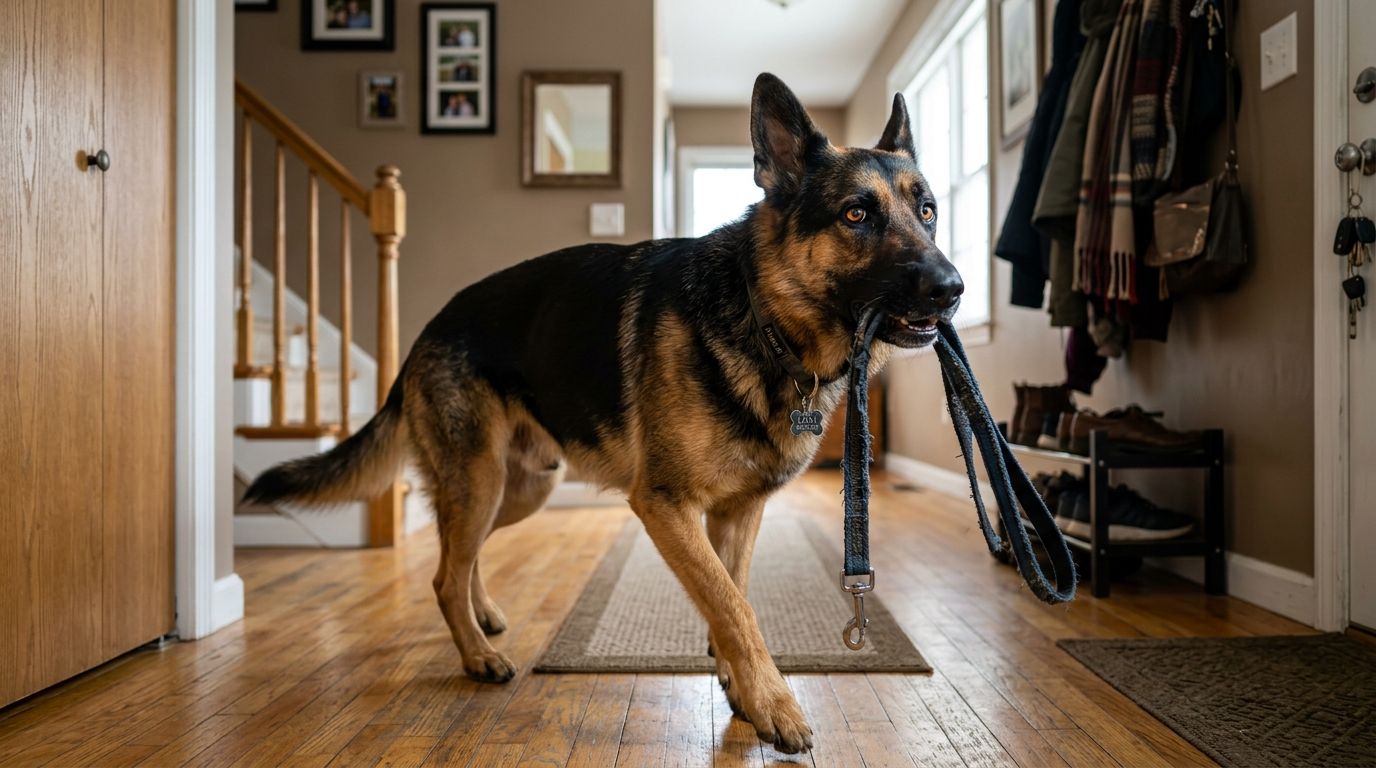
German Shepherds look like adult dogs by 8 to 10 months old, but mentally, they're still puppies until about 2 to 3 years of age. If you're not sure where your dog is developmentally, our GSD growth chart and stages guide breaks it down by month. A 6-month-old German Shepherd puppy can weigh 50+ pounds and still have the attention span and impulse control of a toddler.
What this means:
- They get overstimulated easily
- They have short attention spans during training
- They cycle between intense energy bursts and crashing
- They bite, jump, and zoom because they literally can't help it
What to do: Be patient. Set realistic expectations for their age. A 6-month-old GSD shouldn't be expected to lie calmly for hours. Short training sessions (5-10 minutes), structured play, and enforced nap times will help.
2. Insufficient Physical Exercise
German Shepherds were bred to work all day - herding sheep across miles of terrain. Their energy reserves are enormous.
Minimum daily exercise for a healthy adult GSD:
- 1.5 to 2 hours of exercise per day
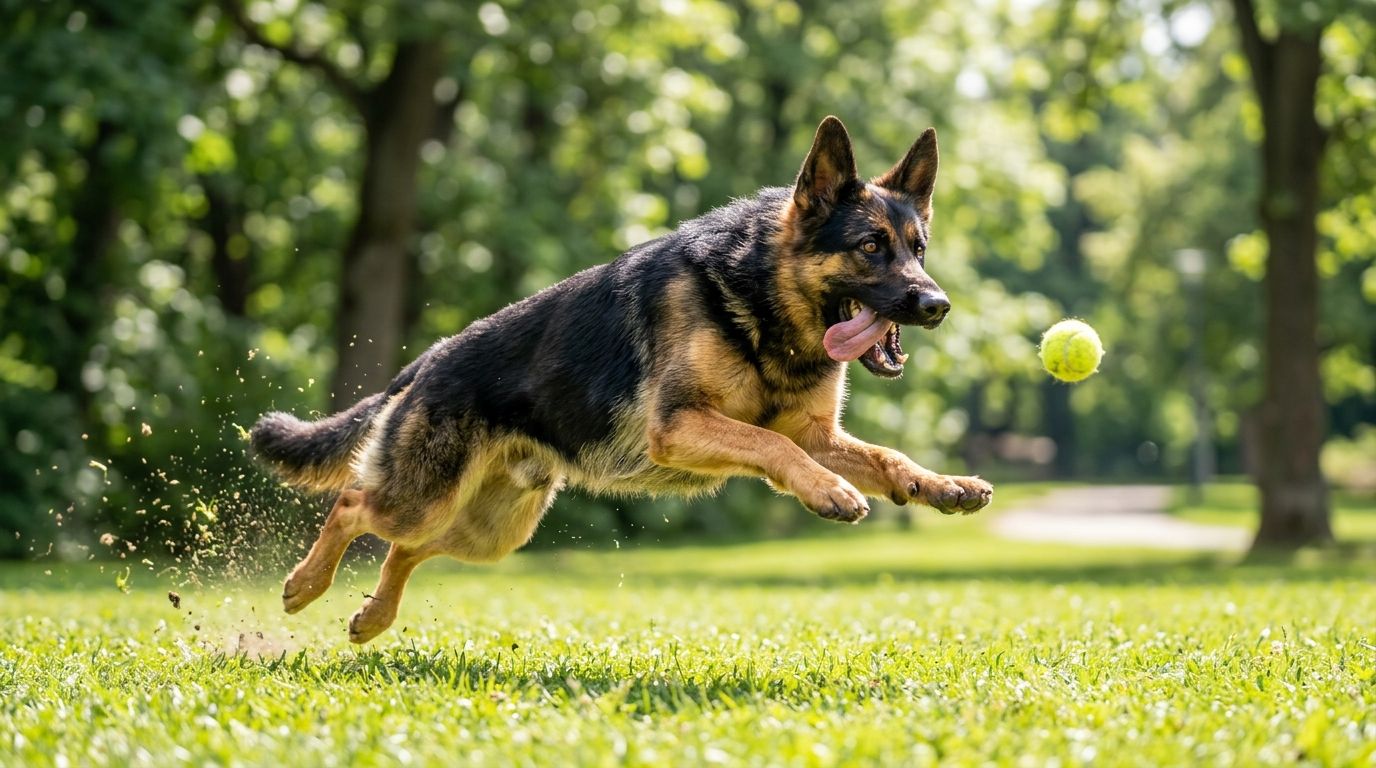
- At least one high-intensity session (running, fetch, tug-of-war)
- Off-leash exercise when possible (e.g., dog park or fenced yard)
A 20-minute leash walk around the block isn't going to cut it. That's a warm-up for a German Shepherd, not a workout.
Best exercises for burning GSD energy:
- Swimming (low-impact, high-energy burn)
- Fetch with a ball launcher
- Flirt pole sessions
- Long hikes with elevation changes
- Running alongside a bicycle
- Off-leash play with compatible dogs
3. Not Enough Mental Stimulation
Here's what most people miss: a tired body doesn't always mean a tired mind. German Shepherds need mental exercise just as much as physical exercise.
A GSD who has been on a long run but hasn't used their brain will still be restless, mouthy, and hyper. Their body is tired, but their mind is racing.
Mental stimulation ideas:
- Puzzle feeders and snuffle mats
- Nose work and scent detection games
- Obedience training sessions
- Learning new tricks (GSDs can learn 100+ commands)
- Hide-and-seek with treats or toys
- Frozen Kongs stuffed with peanut butter
Pro tip: 15 minutes of nose work tires a German Shepherd out more than 30 minutes of running. Mental exercise is incredibly efficient for this breed.
4. Why Is My German Shepherd So Hyper Without Structure?
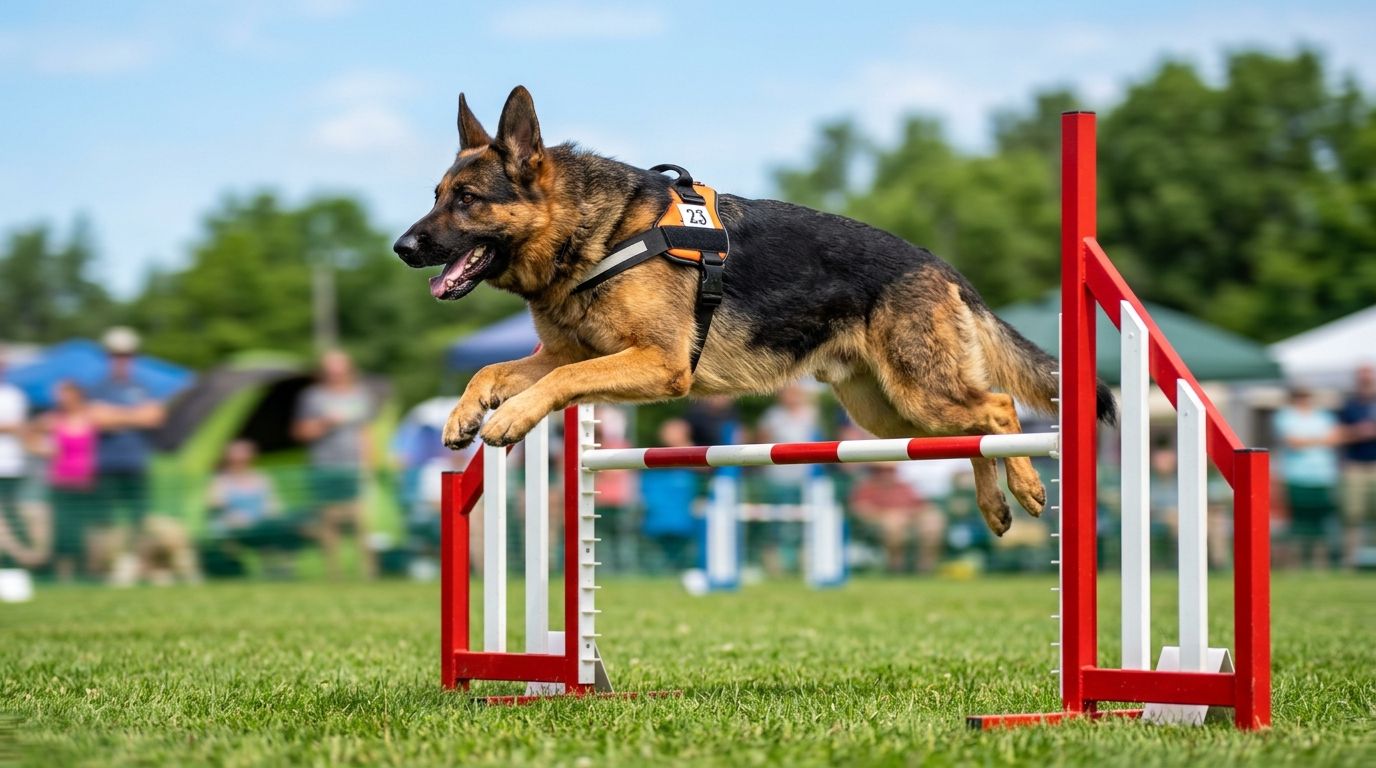
German Shepherds thrive on routine. They're working dogs who expect a structured day. Without consistent routines, they become anxious and channel that anxiety into hyperactive behavior.
An ideal GSD daily structure:
- Morning: Walk or exercise session
- Mid-morning: Enrichment or training
- Midday: Rest time (enforced if needed)
- Afternoon: Another exercise session
- Evening: Calm bonding time
- Night: Settled sleep routine
When a GSD doesn't know what's expected of them or when the next activity is coming, they stay in a constant state of alertness. That looks like hyperactivity, but it's actually anxiety about unpredictability.
5. Overexcitement, Not Hyperactivity
There's an important difference between true hyperactivity and overexcitement. Many German Shepherds that seem hyper are actually just easily overstimulated.
Signs of overexcitement vs. hyperactivity:
| Overexcitement | True Hyperactivity |
|---|---|
| Triggered by specific events (guests arriving, leash coming out) | Constant regardless of stimulation |
| Can calm down after the trigger passes | Rarely settles, even when exhausted |
| Responds to training and redirection | Doesn't respond well to normal training |
| Normal during rest periods | Restless even during expected rest times |
If your GSD goes wild when you grab the leash but calms down 10 minutes into the walk, that's overexcitement - not hyperactivity. The fix is teaching them impulse control, not more exercise.
Impulse control exercises:
- "Wait" before meals
- "Sit" before putting the leash on
- Threshold training (waiting at doors)
- "Leave it" with increasing distractions
6. Diet May Be Playing a Role
Believe it or not, your German Shepherd's food can affect their energy levels. Diets high in simple carbohydrates and sugars can cause energy spikes and crashes - similar to giving a child too much candy.
What to look for in your GSD's food:
- High-quality animal protein as the first ingredient
- Moderate fat content (12-18%)
- Complex carbohydrates instead of fillers like corn or wheat
- No artificial colors, flavors, or preservatives
Some GSD owners report a noticeable calming effect after switching from grocery-store kibble to higher-quality food. If you're unsure what to look for, our GSD feeding chart by age covers portions and food quality for every life stage. While diet alone won't fix a hyper dog, it can reduce unnecessary energy spikes.
7. They're Not Getting Enough Sleep
Puppies need 18 to 20 hours of sleep per day. Adult German Shepherds need 12 to 14 hours. If your GSD isn't sleeping enough, they'll become overtired - and an overtired dog looks exactly like a hyperactive dog.
Signs your GSD is overtired, not overstimulated:
- Biting and mouthing more than usual
- Zooming at random times (especially evenings)
- Unable to settle even when lying down
- Becoming more reactive to small noises
Fix: Enforce nap times. Crate training is incredibly valuable for this. If your puppy has been awake for 1 to 2 hours, guide them to their crate for a nap. They may protest at first, but they desperately need the rest.
The overtired puppy trap: Most first-time GSD owners think a hyper puppy needs more exercise. Often, they need the opposite - more sleep. An overtired German Shepherd puppy bites harder, zooms more, and can't focus on anything. Try enforcing a nap before adding another walk.
8. Genetics and Breeding Lines
Not all German Shepherds are created equal when it comes to energy levels. Working line German Shepherds (Czech, DDR, Belgian) are bred for drive, stamina, and intensity. They are naturally more energetic than show line GSDs (American or West German show lines).
If you adopted a working-line GSD expecting a casual family pet, you may be dealing with a dog whose energy requirements are genuinely more than average. Working-line dogs often need:
- A "job" (protection training, agility, nose work)
- 2+ hours of intense daily exercise
- Advanced obedience or sport training
Knowing your dog's lineage helps set realistic expectations.
9. Inadvertent Reinforcement
This is the one nobody wants to hear: you might be accidentally training your dog to be hyper.
If your GSD jumps on you and you push them away (touching = attention), they learn that jumping gets a response. If they bark at you and you talk to them (even to say "quiet!"), they learn that barking works. If they zoom around the house and you laugh or chase them, they learn that zooming is rewarding.
How to break the cycle:
- Ignore unwanted behavior completely (no eye contact, no words, no touch)
- Reward calm behavior the moment it happens
- Use "place" training - teaching your GSD to go to a specific spot and stay there
- Invest in the right training equipment to keep sessions effective
- Be consistent - every family member needs to follow the same rules
The Calming Timeline: What to Expect
| Age | Energy Level | What to Expect |
|---|---|---|
| 3-6 months | 🔴 Extreme | Biting, zooming, short attention span |
| 6-12 months | 🔴 Very High | Adolescent rebellion, testing boundaries |
| 1-2 years | 🟠 High | Maturing but still very active |
| 2-3 years | 🟡 Moderate-High | Beginning to settle, more responsive |
| 3-5 years | 🟢 Moderate | "Prime years" - energetic but manageable |
| 5+ years | 🟢 Calm | Still active but significantly mellowed |